 USA
USA Mexico
 Canada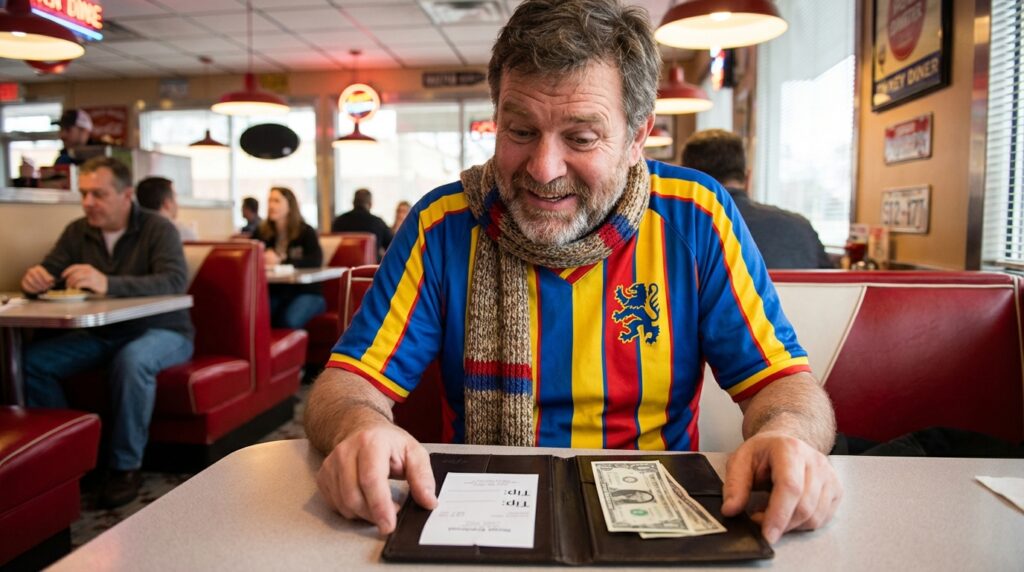
Have you ever stared down at a restaurant receipt in absolute confusion while dining on vacation? You see the cost of your juicy American burger, you notice the unexpected local sales tax added to the bottom, and then you see a blank line staring back at you, demanding a gratuity.
Welcome to the complex, unwritten, and often confusing world of United States tipping culture. Back home in Europe, service is almost universally included in the price of your meal. If a server does a fantastic job, leave a few spare coins on the table or round up the final bill to show your appreciation. In America, the system operates on a completely different frequency. Tipping here feels less like a polite gesture and more like a hidden tax on your vacation budget. If you want to navigate the host cities smoothly without offending the locals or ruining your traveller rating, you need a solid game plan. Let us dive deep into exactly how American tipping works so you can focus entirely on the tournament action.
The Shocking Reality of the American Minimum Wage
To truly understand why tipping is so deeply ingrained in American society, you have to look behind the curtain of the hospitality industry. Why do Americans expect you to pay extra for someone simply doing their job? It all comes down to how workers are legally compensated.
In many parts of the United States, servers, bartenders, and drivers earn a base salary that sits well below the standard minimum wage. We are talking about an hourly rate that barely covers the cost of a daily bus pass. For these hardworking individuals, a tip is not just a nice bonus to buy an extra pint on the weekend. The tip is their actual income. It pays their monthly rent, buys their groceries, and keeps the lights on at home. When you sit down at a restaurant in the United States, you are implicitly entering into a social contract. The restaurant provides the food, and you directly pay the server for their labour through your gratuity. Treating a tip as optional is considered a massive cultural foul, akin to walking out of a store without paying for your merchandise.
Navigating Sit-Down Restaurants Without Offending the Staff
So, you just finished a massive plate of authentic barbecue in Kansas City or a stunning seafood dinner in Miami. The server drops a leather booklet on your table containing the final bill. What exactly are you supposed to do next?
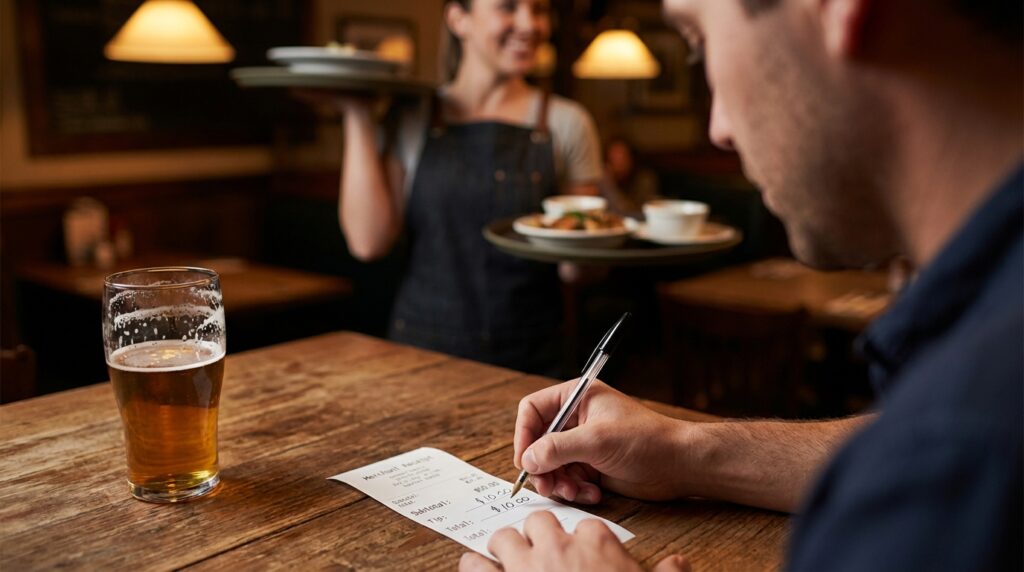
In the modern United States economy, the expected standard for a sit-down restaurant meal falls strictly between eighteen and twenty-two percent. While the math might seem daunting at first, twenty percent is universally considered the absolute safe standard. If you leave a twenty percent tip, you are effectively shaking the server’s hand and telling them they did a great job.
What happens if the service is just okay? If the server brought your food, rarely checked on your table, and offered a mediocre experience, you still drop fifteen percent. Always remember to calculate your percentage based on the pre-tax total of your food and drinks, not the inflated final number at the bottom of the receipt.
The Bartender and Stadium Concession Rules
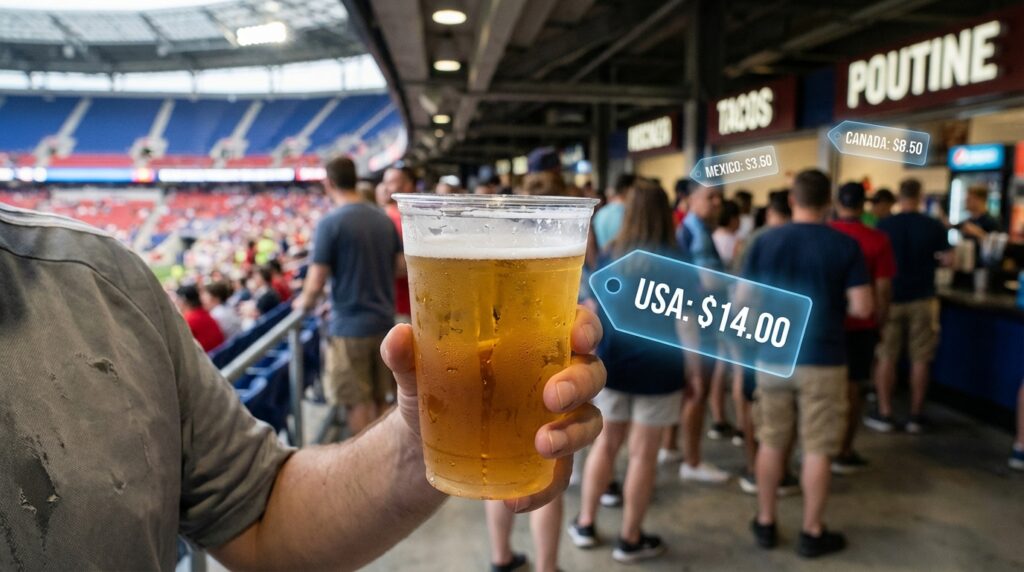
Your match day experience will undoubtedly involve a few cold beverages. When you walk up to a crowded bar near the stadium or visit a pub to watch the early fixtures, the rules change slightly. You do not need to calculate complex percentages when ordering a simple pint of beer.
The golden rule for bartenders is dropping one or two dollars per drink. If you order a complicated cocktail that takes five minutes to mix, lean toward two dollars. If they pop the cap off a bottle of domestic lager, one dollar is perfectly fine.
But what happens when you finally step inside the massive architecture of an American football stadium? The lines are incredibly fast, and the environment is chaotic. The good news is that modern stadium food lines are almost entirely cashless and heavily rely on a self-serve model. If you are grabbing a hot dog from a warming rack and pulling a canned beer from a refrigerator, no tip is required. However, if you sit down at one of the premium, full-service restaurant spots located near the stadium gates, you must revert immediately to the standard twenty percent restaurant rules.
Surviving Rideshares and Taxis During Tournament Chaos
Getting around massive American cities requires utilizing rideshare apps like Uber or Lyft, or hailing a traditional taxi cab. When the referee blows the final whistle, and seventy thousand fans flood the streets, securing a ride becomes a fierce competition. Tipping your driver correctly is the secret weapon to surviving this transportation madness.
At the end of your ride, the app will prompt you to leave a tip. You are expected to leave between fifteen and twenty percent of the total fare. If your driver navigated heavy match day traffic, offered you bottled water, or played great music, aim for the higher end of that spectrum.
Why is this so critical for European fans? Because the rideshare ecosystem runs entirely on a mutual rating system. If you consistently skip the tip, drivers will absolutely notice, and they will leave you a low passenger rating. During the sheer chaos of the 2026 World Cup, drivers will have their pick of thousands of desperate fans needing a ride. If your passenger rating tanks because you act like a cheap tourist, drivers will actively ignore your ride requests. You will find yourself stranded on a curb while everyone else heads to the victory parties.
Tipping Your Hotel Staff and Housekeeping
Your hotel is your peaceful sanctuary during a busy travel schedule, and the staff works tirelessly behind the scenes to keep it that way. When you arrive exhausted from a long international flight, a friendly bellhop will likely offer to carry your heavy luggage up to your room. You should confidently hand them two to five dollars per bag for their effort.
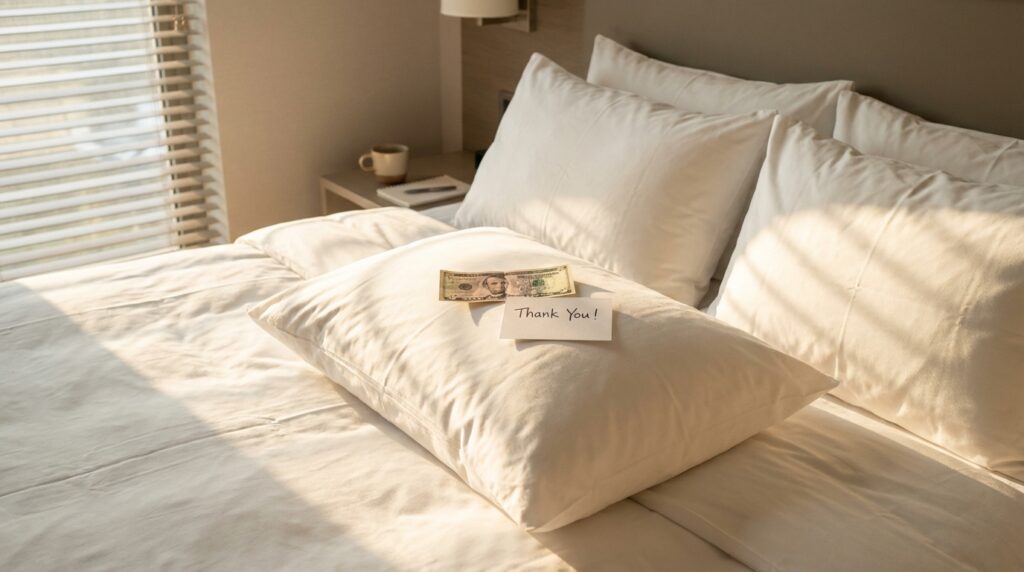
What about the housekeeping staff who magically make your bed and replace your towels while you are out exploring the city? You should leave between two and five dollars per night. The absolute best practice is to leave this cash daily on your pillow or accompanied by a small note that clearly says “Thank You.” Do not wait until the final day of your trip to leave a massive pile of cash, because the housekeeping staff rotates shifts constantly. The person who cleans your room on Tuesday might not be the same person who cleans it on Friday, so tipping daily ensures the right person gets rewarded for their hard work.
The Rise of Tipflation and Digital Screens
As you explore the host cities, you will quickly notice a relatively new phenomenon that deeply annoys even native-born Americans. We call it tipflation. Every single transaction now comes with a digital screen politely begging for extra money.
You will walk into a trendy coffee shop, order a plain black drip coffee, and the cashier will dramatically spin a digital iPad screen around to face you. The screen will boldly suggest tipping twenty, twenty-two, or even twenty-five percent for an interaction that literally took four seconds. Do not let these glowing screens bully your wallet.
For quick counters, bakeries, or simple coffee shops where no actual table service occurs, you are never obligated to leave a massive percentage. You can confidently hit the custom tip button and leave one or two dollars, or drop your spare change into the physical tip jar on the counter. Just stay consistent and always remain polite. The cashiers are not the ones who programmed the aggressive software. Remember, in American culture, under-tipping is noticed and judged far more harshly than over-tipping. When in doubt, throwing an extra dollar into the jar is a cheap way to ensure a warm smile.
Related Post: How Much a Beer Actually Costs Inside North American Stadiums
Conquering the Post-Match Digital Blackout
You have memorized the tipping percentages. You know exactly how to handle the iPad flip at the local coffee shop. You are culturally prepared for the American hospitality experience. However, there is a massive logistical nightmare waiting to derail your trip the moment the football match ends completely.
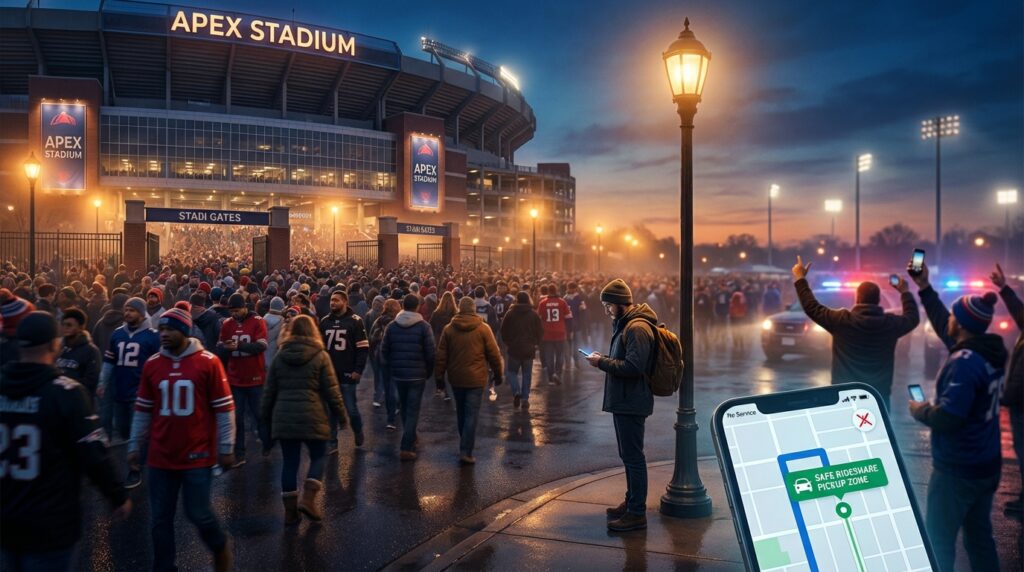
Picture this incredibly common scenario. The final whistle echoes through the stadium. Tens of thousands of screaming fans all pour out of the exits at the same moment. Every single person immediately reaches into their pocket and pulls out their smartphone to hail a rideshare, find the walking path to a nearby restaurant, or locate their hotel route.
What happens next is entirely predictable. The local cellular networks violently collapse under the massive, sudden weight of the concentrated data traffic. Your signal drops to absolutely zero bars. Your screen freezes on a spinning loading wheel. You cannot load a digital map, you cannot order an Uber, and you are suddenly flying completely blind in a massive, chaotic sea of pushing people.
This terrifying digital blackout is exactly why smart, highly prepared international travellers pre-download the offline Stadium Route app before they ever leave their hotel room.
Even when the massive networks completely crash under the heavy existing crowds, your Stadium Route app will instantly map out the absolute safest pedestrian routes to nearby restaurants where you can grab a post-match bite. It will clearly guide you to the designated safe rideshare pickup zones away from the stadium gridlock, ensuring you can smoothly connect with your driver and leave a fantastic twenty percent tip. It eliminates the panic of the stadium crush, ensuring your journey back to your hotel bed is just as smooth and triumphant as your arrival.
Ending Lines
Understanding the intricate nuances of the United States tipping culture is the ultimate key to unlocking a stress-free 2026 FIFA World Cup vacation. While it might initially feel like a frustrating hidden tax compared to the inclusive pricing back home in Europe, embracing this unwritten social contract ensures you receive world-class service throughout your entire trip. Always remember the golden rule of leaving twenty percent at sit-down restaurants, heavily respect your rideshare drivers to protect your passenger rating, and keep a stash of small bills handy to reward the hardworking hotel staff. Do not let the aggressive digital tip screens at quick-service counters intimidate you, but always lean toward generosity when travelling abroad. Most importantly, never let a crashed cellular network leave you stranded in an unfamiliar American city. Arm your smartphone with the indestructible offline power of the Stadium Route app to navigate the crowds flawlessly. Learn the rules, tip your servers, and get ready to experience the most thrilling tournament on the planet like an absolute professional!