 USA
USA Mexico
 Canada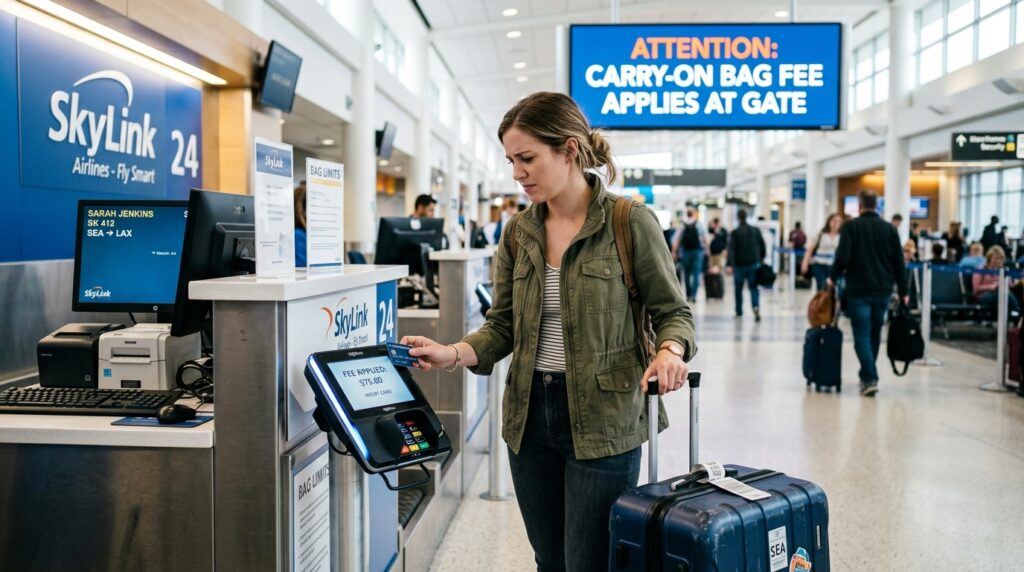
Have you ever experienced the sheer thrill of finding a round-trip flight for less than fifty dollars? You sit at your computer, eyes wide, feeling like you just won the travel lottery. You immediately click “book,” already dreaming about the massive 2026 global football matches you are about to attend. But then, as you click through the checkout screens, reality hits you like a ton of bricks. Suddenly, the airline wants to charge you more for your suitcase than they did for your actual seat.
If you are flying on ultra-low-cost carriers like Spirit, Frontier, or Allegiant, you know exactly what I am talking about. It feels incredibly frustrating and a little bit deceptive. Why do these budget US airlines charge extra for carry-on bags? Are they just trying to ruin your vacation before it even starts?
The truth is actually a fascinating mix of brilliant business economics and human psychology. These airlines have completely re-engineered how we travel across the country. Let us dive deep into the real reasons behind those pesky luggage fees, and more importantly, figure out exactly how you can outsmart the system on your way to the stadium.
The Genius Behind Unbundled A La Carte Pricing
To understand the baggage fee, you have to understand the fundamental business model of ultra-low-cost carriers. Traditional airlines sell you a complete package. Budget airlines operate on a totally different philosophy known as an unbundled or à la carte pricing model.
Understanding the Bare Fare Philosophy
Think of a traditional airline ticket like buying a fully loaded, deluxe burger at a restaurant. It comes with cheese, bacon, lettuce, tomato, and a massive side of fries. You pay one high price, and you get everything, even if you do not actually want the tomatoes.
Budget airlines, on the other hand, sell you just the plain meat and the bun. That is it. That is your base fare. It guarantees you a single, random seat on the aeroplane to get you from point A to point B. If you want anything else, you have to pay for it separately. Do you want to choose your seat? That is an extra fee. Do you want a bottle of water? That is a fee. Do you want to bring a suitcase to put in the overhead bin? You guessed it. That is an extra fee.
By stripping away every single complimentary perk, these airlines can advertise the absolute lowest base fares possible. They use that shockingly cheap headline price to grab your attention and beat their competitors on flight search engines.
The Difference Between Personal Items and Carry-On Bags
Where most travellers get confused, and ultimately penalised, is misunderstanding the strict difference between a free personal item and a paid carry-on bag. The budget airlines rely on this confusion to generate massive amounts of revenue.
Sizing Up Your Free Personal Item
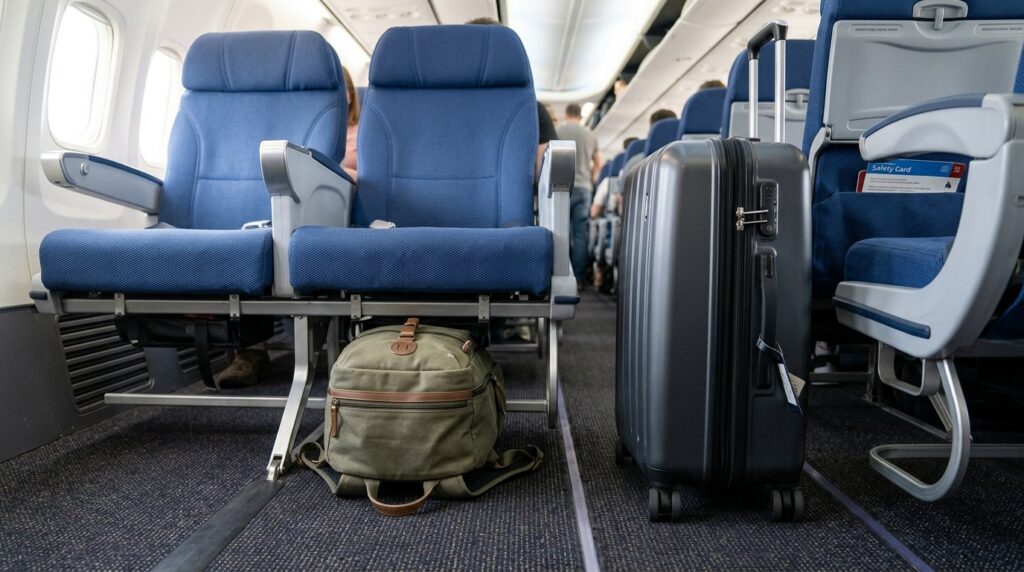
When you buy your bare-bones ticket, the airline does grant you one tiny allowance. You are permitted to bring one free personal item onboard. However, the dimensions are incredibly strict. For example, Spirit Airlines maxes out their personal item at 18 by 14 by 8 inches. Frontier Airlines enforces a similar size of 14 by 18 by 8 inches.
What does that actually look like in the real world? We are talking about a standard purse, a small laptop bag, or a very compact children’s school backpack. Crucially, this item must fit completely underneath the seat in front of you. It cannot go in the overhead bin. If you are travelling for a quick overnight stadium event and you are an incredibly minimalist packer, you can survive on this free allowance.
The Cost of the Overhead Bin
Now, let us talk about the standard rolling suitcase. You know the one. The standard 22 by 18 by 10 inch or 24 by 16 by 10 inch bag with wheels and a telescoping handle. For decades, traditional airlines let you toss this into the overhead bin for free.
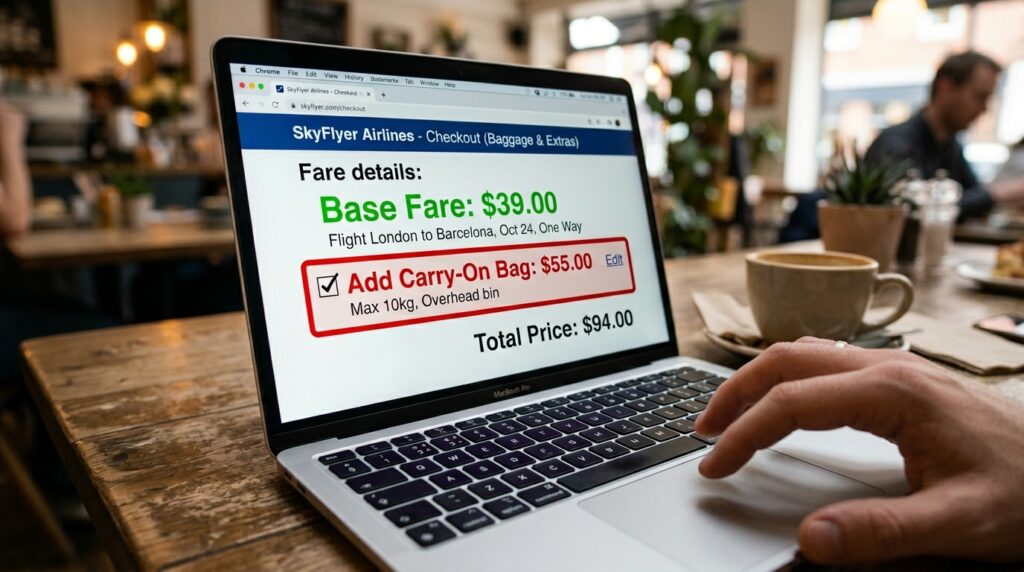
On budget US airlines, placing anything in the overhead bin is considered a premium luxury. Because overhead bin space is incredibly limited on modern aircraft, the airline monetises that real estate. This is your standard carry-on bag, and it comes with a steep price tag. Depending on the airline and the specific route, adding this bag will cost you anywhere from thirty to seventy dollars each way.
How Ancillary Revenue Drives the Airline Industry
Airlines make all their money selling tickets. In the ultra-low-cost world, the ticket is practically a loss leader. The real money is made in what the aviation industry calls ancillary revenue.
Turning Every Extra Into Massive Profit
Ancillary revenue is a fancy corporate term for all the extra things you buy beyond your base fare. Bag fees are undeniably one of the absolute biggest money-makers for these budget carriers. Why? Because basic human nature dictates that most passengers end up needing space.
When you are travelling to a massive 2026 global football tournament, you need to bring your team jerseys, a light jacket, comfortable walking shoes, and your toiletries. Fitting all of that into a tiny personal item backpack is nearly impossible for the average fan. The airlines know this. They advertise the fifty-dollar flight knowing full well that you will eventually cave and pay the sixty-dollar bag fee.
Attracting Price-Sensitive Stadium Fans
This strategy is specifically engineered to attract price-sensitive travellers. If you are dropping hundreds of dollars on stadium tickets, you want to save money wherever you can. You see that cheap flight, and you jump on it. The airline secures your business over their more expensive competitors, and then they slowly build the price back up through these ancillary luggage fees. It is a brilliant, highly effective psychological pricing strategy.
The Hidden Operational Benefits of Bag Fees
While making massive profits is the primary goal, charging for carry-on bags actually solves a massive operational headache for the airlines. Time is literally money in the aviation industry.
Speeding Up the Boarding Process
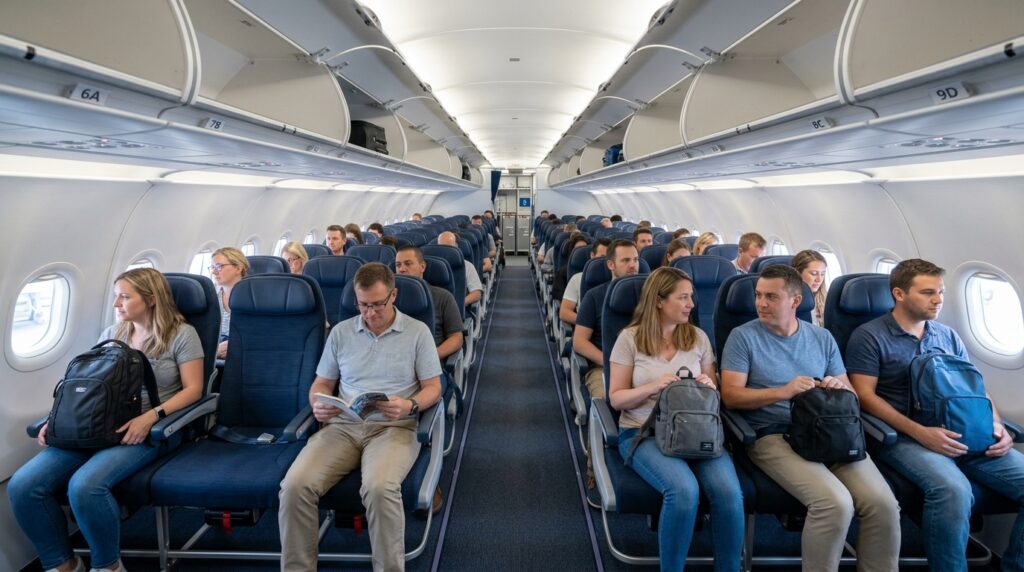
Have you ever boarded a traditional flight and stood in the aisle for twenty minutes while the person in front of you tries to forcefully shove an oversized rolling bag into a tiny overhead bin? It clogs the aisles, delays the flight, and creates massive frustration.
Budget airlines have virtually eliminated this problem. Because they charge a premium for overhead bin space, far fewer people actually bring large rolling bags onboard. Most passengers opt to travel light with just their free personal item tucked under the seat. What is the result? The boarding process is incredibly fast. Passengers walk to their seats, sit down, and the plane pushes back from the gate on time. By charging you for your bag, the airline ensures its planes spend less time sitting on the tarmac and more time flying in the air, making money.
The Dreaded Gate Sizer Box Trap
Now that you know why the fees exist, you need to know how to navigate the strict enforcement of these rules. Budget airlines do not play around when it comes to luggage size. They enforce their policies with ruthless efficiency.
Why Last Minute Fees Cost You Double
The biggest catch of flying on a budget carrier is understanding when to pay your fees. If you purchase your carry-on bag allowance online during the initial booking process, you will pay the absolute lowest rate, usually around thirty to forty dollars.
However, if you try to sneak a larger bag past the gate agents, you will trigger a massive financial penalty. Right before you step onto the jet bridge, you will see the dreaded metal sizer boxes. Gate agents are heavily incentivised to make you place your bag inside these metal frames. If your bag does not fit, or if the wheels and handles stick out over the top, you are caught.
At the gate, that same bag fee can easily jump to an eye-watering sixty-five to ninety-nine dollars. That last-minute penalty can easily double or triple your total travel cost. Furthermore, these fees are strictly non-refundable. You cannot argue your way out of it. You either pay the inflated gate fee or you leave your suitcase behind.
Smart Packing Strategies for 2026 Global Football Fans
When the massive 2026 tournament arrives, millions of fans will be jumping on these budget flights to bounce between host cities. You do not want to blow your entire travel budget on easily avoidable airline penalties. You need a solid game plan.
Related Post: Crossing the US Mexico Border at El Paso for Monterrey Matches
Buying Your Bag Allowance During Booking
The golden rule of flying on an ultra-low-cost carrier is absolute transparency with yourself. Do not lie to yourself about how much you are going to pack. If you know you cannot fit your stadium gear into a small school backpack, accept your reality immediately.
Always buy your carry-on bag allowance during the initial online booking process. Do not wait until online check-in, and absolutely never wait until you reach the airport. Secure the lowest possible price upfront and factor that into your total travel budget.
If you are determined to travel with only a free personal item, measure your bag twice. Use a tape measure at home to ensure your soft-sided duffel bag or backpack strictly adheres to the 18 by 14 by 8-inch limits. Do not pack it so tight that it bulges and becomes impossible to slide into the metal sizer box.
Surviving the Airport and Stadium Chaos
You successfully packed your bags, navigated the budget airline fees, and landed in your host city. You step off the plane, buzzing with adrenaline for the big match. But your logistical challenges are not quite over yet.
Why You Need the Stadium Route App
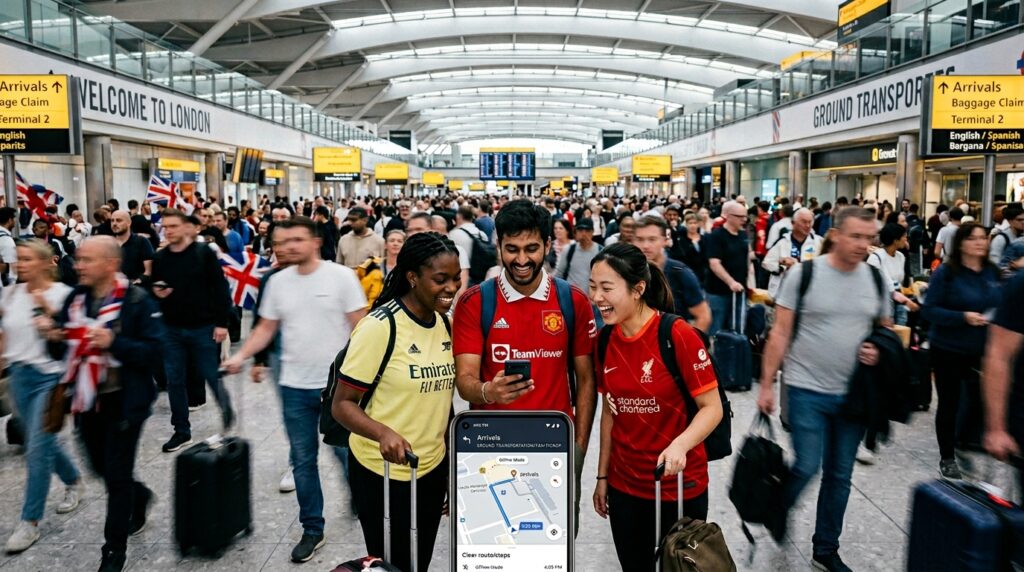
Picture this incredibly common scenario. Tens of thousands of international fans all land at the same airport, jumping into rental cars and rideshares, and heading straight for the massive stadium complex. When that many people congregate in one area, the local cellular networks absolutely buckle under the weight.
You pull out your smartphone to check your map for the quickest route to the stadium gates, but you have zero bars of service. The network has crashed. You are stranded at the airport curb with your compliant personal item, unable to navigate to your hotel or the venue.
This is exactly why smart travellers pre-download the offline Stadium Route app before they ever leave their house. Think of this app as your personal, indestructible digital compass. Because it caches all the crucial wayfinding data directly onto your device, it operates completely offline. Even when the cellular networks collapse under the massive crowds, your Stadium Route app will instantly map out the complex airport terminals, guide you to the correct ground transportation hubs, and seamlessly route you all the way to the stadium gates. It eliminates the panic of the digital blackout, bridging the final gap between your budget flight and your stadium seat.
Ending Lines
Flying on budget US airlines like Spirit, Frontier, and Allegiant does not have to be a frustrating experience filled with hidden fees and gate-side arguments. By understanding their unbundled, à la carte pricing model, you can take total control of your travel budget. Remember that the shockingly cheap headline price only covers your physical seat and one tiny, strictly measured personal item. If you need that overhead bin space for your rolling suitcase, always pay the fee during the initial booking process to avoid the massive penalties enforced by the dreaded gate sizer boxes.