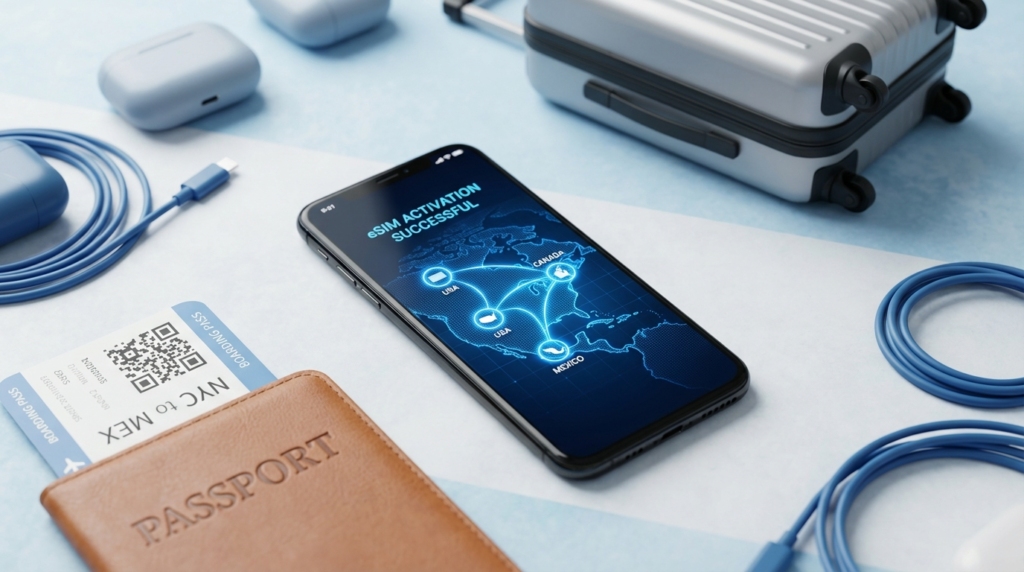
 USA
USA Mexico
 Canada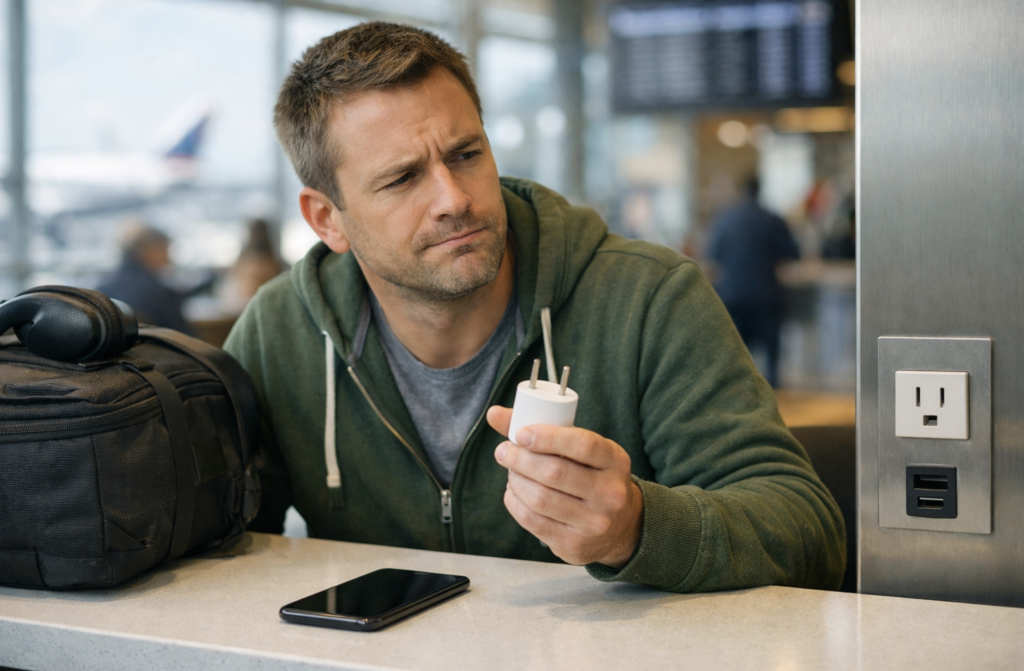
You have just stepped off a grueling transatlantic flight. You are standing in the middle of a massive American airport terminal, your digital match tickets are locked inside your email, your offline stadium map is ready to go, and your phone battery icon turns menacingly red. You reach into your bag, pull out your trusty power brick, and suddenly freeze. The wall socket looks completely alien.
Do you really want to be stuck at one percent battery while trying to pull up your digital ticket or order a rideshare to your hotel?
Heading to the United States for massive stadium events is a logistical puzzle. Between navigating visa rules and figuring out public transport, the last thing you want to stress over is a dead smartphone. One of the top headaches for UK and European supporters is whether their electronics will actually survive the trip across the pond.
Let us cut right to the chase and eliminate your anxiety immediately. The answer is a resounding yes. Your modern smartphone charger will work perfectly in the United States. You do not need to spend a fortune, and you certainly do not need heavy electrical equipment.
Let us dive into the exact science of why your phone is safe, what gear you actually need to pack, and how to survive the digital chaos of an American match day.
The Short Answer for Traveling Fans
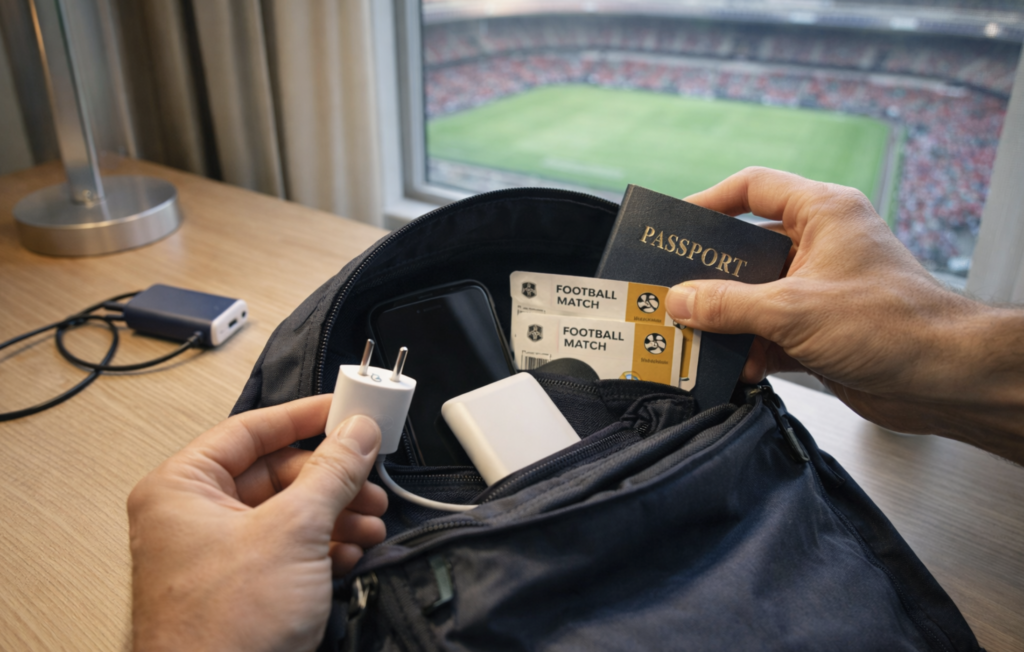
Answer engines and quick searches love a direct response, so here is the golden rule for your travel tech. If you own a smartphone made in the last decade, you only need a cheap plug adapter. You absolutely never need a heavy, expensive voltage converter for your phone.
Your UK or European charger is already designed to handle the American electrical grid. The only problem is that the physical metal pins on your plug will not fit into the holes on the American wall. Think of it like trying to fit a square peg into a round hole. The electricity inside the wall is perfectly fine for your device, but you just need a cheap piece of plastic to act as a physical bridge between your charger and the wall socket.
Understanding the North American Power Grid
To understand why you only need a simple adapter, we need to talk briefly about how electricity works in North America compared to back home. Do not worry, we will keep this simple and skip the boring engineering lectures.
What Do American Wall Outlets Look Like
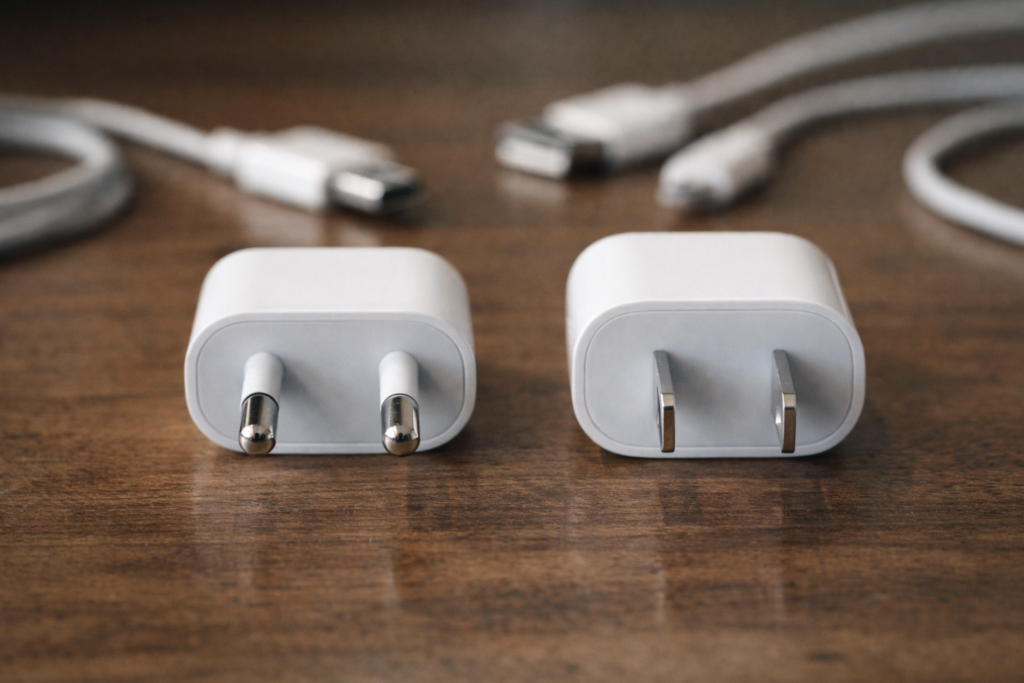
In the United Kingdom, you are used to the Type G plug. This is the massive, heavy plug with three rectangular pins forming a triangle. Across most of mainland Europe, you use Type C or Type F plugs, which feature two round pins.
The United States does things differently. American wall sockets are designed for Type A and Type B plugs.
Type A consists of two flat, parallel pins. Type B is exactly the same, but it includes a third round grounding pin beneath the two flat ones. When you arrive at your hotel in New York or Los Angeles, every wall outlet will look like a little shocked face waiting for these flat pins.
The Voltage Difference Explained
Here is where the panic usually sets in for international travelers. The United States delivers electricity at 120 volts running at a frequency of 60Hz. Meanwhile, the UK and Europe pump out electricity at 230 or 240 volts at 50Hz.
Fifty years ago, if you plugged a European appliance directly into an American wall, it would likely fail to turn on, or worse, it would run at half speed and eventually break. Conversely, plugging an American appliance into a British wall would usually result in a loud pop, a puff of smoke, and a ruined holiday.
So, why is your phone safe today? The secret lies in the magic of modern manufacturing.
Adapters Versus Converters The Ultimate Showdown
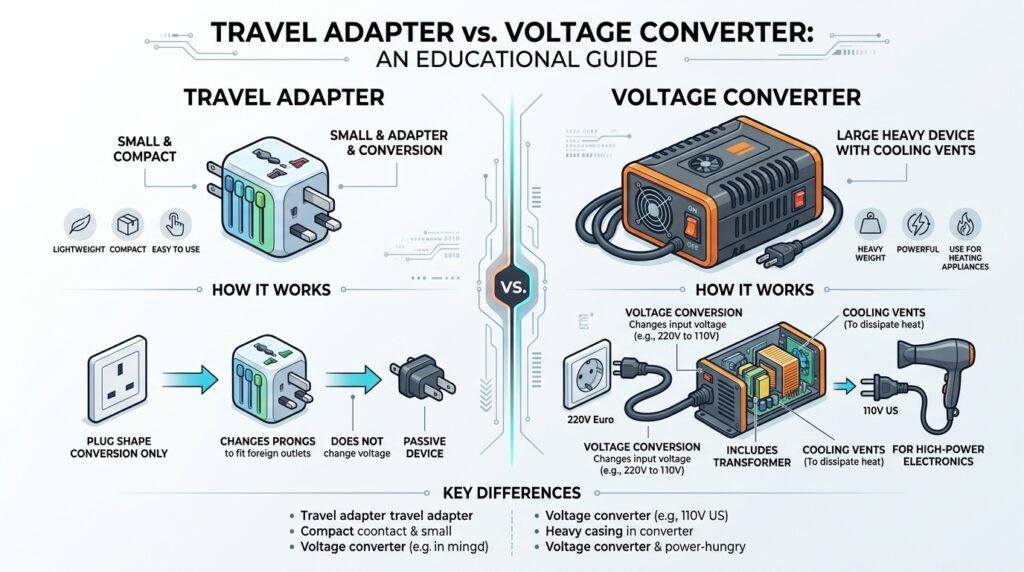
When you walk into a travel store, you will see two very different products sitting on the shelf. One is a plug adapter, and the other is a voltage converter. Buying the wrong one is the biggest mistake you can make.
Why You Only Need a Simple Plug Adapter
A plug adapter does absolutely nothing to the electricity. It contains no computer chips and no transformers. It is simply a plastic shell with metal conductors that changes the physical shape of your plug. You push your UK or European pins into the back of it, and American flat pins stick out the front.
Because modern smartphone chargers manage the voltage internally, this physical shape change is the only modification required. You can easily find these compact adapters for under ten dollars online. UK fans should search for a G-to-A/B adapter, while Europeans need C/F-to-A/B versions.
The Danger of Using Heavy Voltage Converters
A voltage converter, on the other hand, is a heavy, expensive brick designed to physically alter the flow of electricity from 120V up to 240V. You might think buying one is the safer, more conservative choice. It is actually the opposite.
Using a heavy voltage converter for a modern smartphone is like bringing a sledgehammer to crack a peanut. Cheap voltage converters often use a crude method called “chopping” the alternating current wave. While this might work fine for a simple heating element like a travel kettle, it can confuse the delicate microchips inside your fast-charging phone brick.
Real travelers constantly share their horror stories on forums about heavy converters overheating in hotel sockets or frying their electronics. Leave the bulky converter at home.
Checking Your Specific Phone Brand
Even knowing all of this, you might still feel a tiny shadow of doubt. What if your specific phone is the rare exception? Let us look at what the biggest tech manufacturers have to say about international travel.
People also love to read: The Cheapest Way to Get from JFK Airport to MetLife Stadium
Apple iPhone Chargers in the USA
If you are carrying an iPhone, you are in safe hands. Apple official support documentation clearly confirms that all of their USB power adapters are designed for global travel. Whether you have the old 5W cube or the massive 140W MacBook Pro fast charger, they are all built to accept any voltage between 100V and 240V.
This means that when you plug your European Apple charger into a wall in Dallas or Seattle, the smart circuitry inside the white plastic brick instantly detects the 120V current. It smoothly steps it down to the exact 5V or 9V direct current your iPhone battery craves. No extra hardware is required.
Samsung and Android Devices
The story is exactly the same for the Android ecosystem. Samsung states quite clearly on their support pages that their modern chargers are dual voltage.
If your Samsung charger has the words “Travel Adapter” printed on it, you are good to go. The technology used in fast chargers for Google Pixel, OnePlus, and Motorola devices all rely on the same universal switching power supply technology. The lower American voltage is completely safe.
How to Read the Tiny Label on Your Power Brick
Trusting an internet article is great, but verifying the facts with your own eyes is better. Before you pack your bags, pick up your phone charger and look very closely at the tiny, almost unreadable text printed on the bottom or the side. You might need to hold it under a bright light or use your phone camera to zoom in.
Look for the word “Input.” Next to it, you should see something that looks exactly like this: INPUT 100-240V ~ 50/60Hz.
If your charger has those exact numbers, you have won the travel lottery. That text is a guarantee from the manufacturer that the brick can handle the American electrical grid without catching fire.
A quick warning: This rule applies to laptops, tablets, and phones. It absolutely does not apply to hair dryers, hair straighteners, or electric kettles. Those high-heat appliances are rarely dual voltage. If you plug a European hair dryer into a US wall, it will barely blow warm air. Do not mix up your phone tech with your beauty tech.
Preparing for Match Day Logistics
Now that your hotel room charging situation is sorted, we need to talk about the reality of the stadium. Stadium Route is all about getting you from your ticket to your seat with zero stress, and battery management is a massive part of that journey.
The Reality of Charging at US Stadiums
American sporting venues like MetLife Stadium in New Jersey or Lumen Field in Seattle are architectural marvels, but they are not built to be giant charging stations for international tourists.
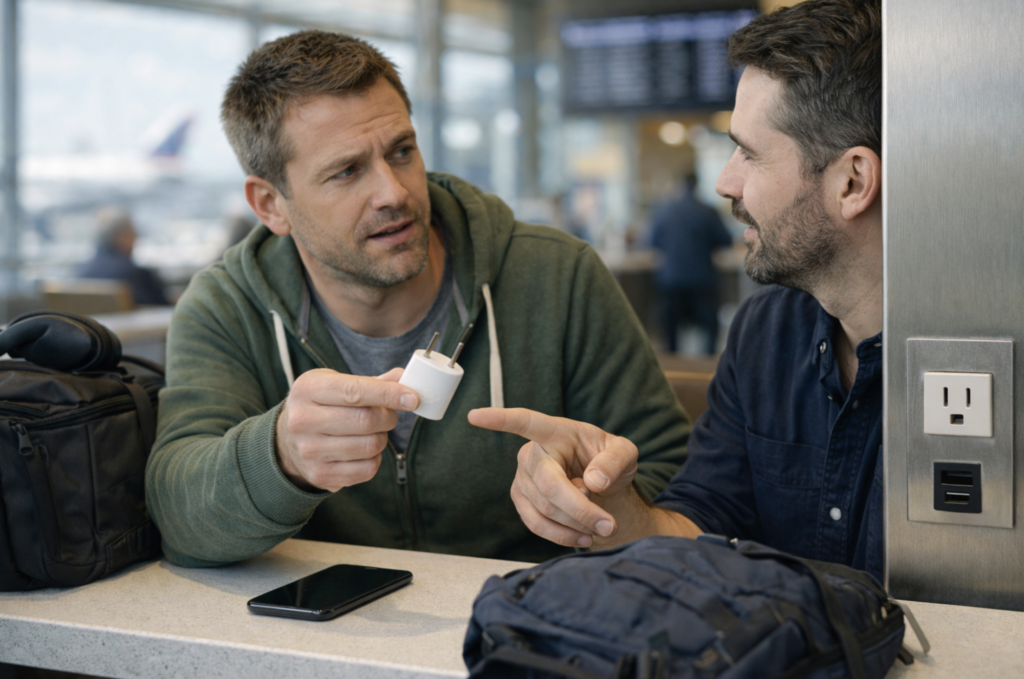
While you might find a stray wall outlet near a restroom or a concession stand concourse, these are strictly American Type A or Type B sockets. If you forgot your adapter at the hotel, that wall plug is entirely useless to you. Furthermore, dedicated mobile charging stations are incredibly rare. When you do find one, it will be swarmed by dozens of other fans dealing with the exact same battery anxiety.
Why a Power Bank is Your Best Friend
Relying on a wall socket inside a stadium holding eighty thousand screaming fans is a terrible tactical plan. You need your phone alive for digital ticket entry, capturing photos of the match, navigating the offline stadium maps we provide on Stadium Route, and most importantly, securing your rideshare or navigating the train routes when the final whistle blows.
Your best strategy is a two-pronged attack. Keep your cheap plug adapter stored in your carry-on luggage so you can charge up at the airport during layovers. Then, invest in a high-capacity portable power bank. Charge the power bank overnight at your hotel using your UK or European brick paired with your cheap adapter. On match day, leave the wall charger in your room and slip the power bank into your pocket.
Where to Buy the Right Gear
You know what you need, so where is the best place to get it without getting ripped off?
Grabbing Adapters Before You Fly
The smartest move is to buy your adapters weeks before your flight. Online retailers like Amazon offer multi-packs of UK-to-US or EU-to-US plug adapters for incredibly low prices. Buying a pack of three ensures you have one for your phone, one for your laptop, and a spare to keep in your stadium daypack just in case. Look for well-reviewed brands like Ceptics or Tessan.
Last Minute Airport Purchases
Did you forget to pack one? Do not panic. Real travelers on Reddit travel forums and Facebook groups report having the exact same experience. Countless international fans have landed at JFK or Miami International, realized their mistake, and simply walked into an airport electronics kiosk.
While you will pay a slight “tourist tax” at the airport, you can usually grab a basic adapter for under ten dollars. As one fan on an American travel forum noted, they bought a cheap adapter at the arrivals terminal and charged their device flawlessly at their hotel near the stadium with zero issues.
A Real World Fan Experience
Think about the journey ahead. You are navigating foreign subway systems, dealing with crowds, and trying to soak in the atmosphere of the biggest tournament on the planet. The logistics are complex enough without creating imaginary electrical problems.
By trusting the engineering inside your modern power brick and packing a simple, lightweight plug adapter, you eliminate one of the biggest travel headaches before you even leave home. You can focus on finding the best pre-match tailgate party instead of hunting for an electronics store in downtown Los Angeles.
Ending Lines
Surviving an international sporting event is all about eliminating friction. Your UK or European phone charger will work flawlessly in American outlets, provided you bridge the physical gap with a basic Type A or Type B adapter. Ignore the expensive voltage converters, check the tiny input label on your power brick for peace of mind, and always carry a backup power bank to the stadium. Make this one small preparation step right now, and ensure your digital lifeline stays fully powered from the opening kickoff to the final whistle.