 USA
USA Mexico
 Canada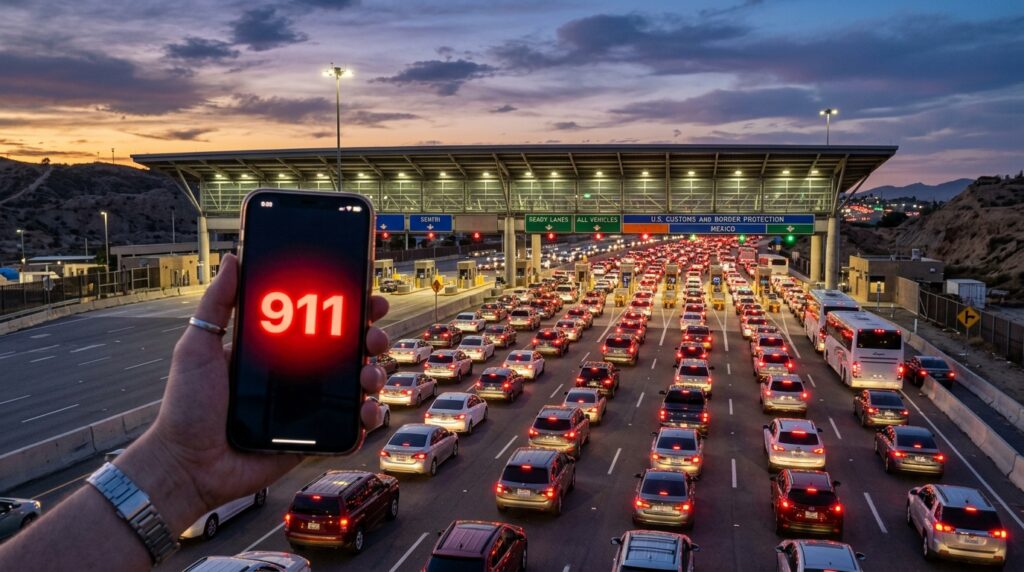
Have you ever felt that sudden, icy drop in your stomach when you realize you are lost in a foreign city, and your phone shows zero bars of service? Now, imagine experiencing that exact panic while surrounded by tens of thousands of screaming fans exiting a massive sports stadium.
Traveling across the United States, Canada, and Mexico for the massive 2026 global football tournament is going to be the adventure of a lifetime. The energy will be electric, the matches will be legendary, and the memories will last forever. But let us be completely honest for a second. Navigating three massive countries with different cultures, languages, and infrastructures can quickly turn incredibly stressful if things go sideways.
When you pack your bags for the ultimate sports road trip, your passport and your match tickets are only half of the equation. You need a rock-solid safety net. Cell towers routinely crash under the weight of massive crowds, and you need to know exactly how to get help fast when the digital world goes dark. Let us build your ultimate safety toolkit so you can focus on the beautiful game instead of worrying about the what-ifs.
Preparing for the Massive 2026 North American Football Tournament
We are talking about a sporting event of unprecedented scale. Millions of international tourists will be crossing borders, riding unfamiliar public transit, and exploring bustling host cities. The sheer volume of people descending upon North America will push local infrastructure to its absolute limits.
When the Stadium Crowds Crash Your Cell Service
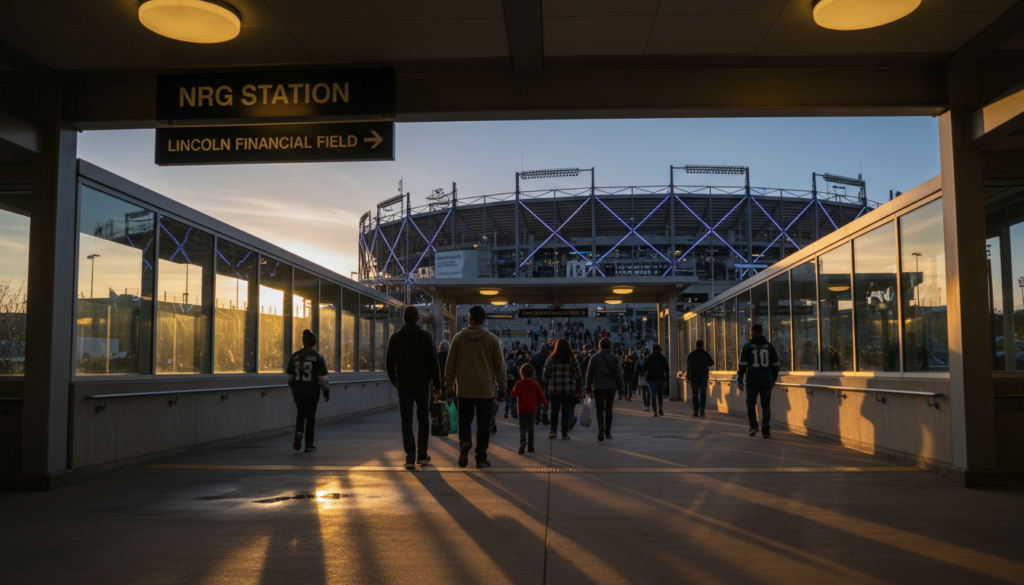
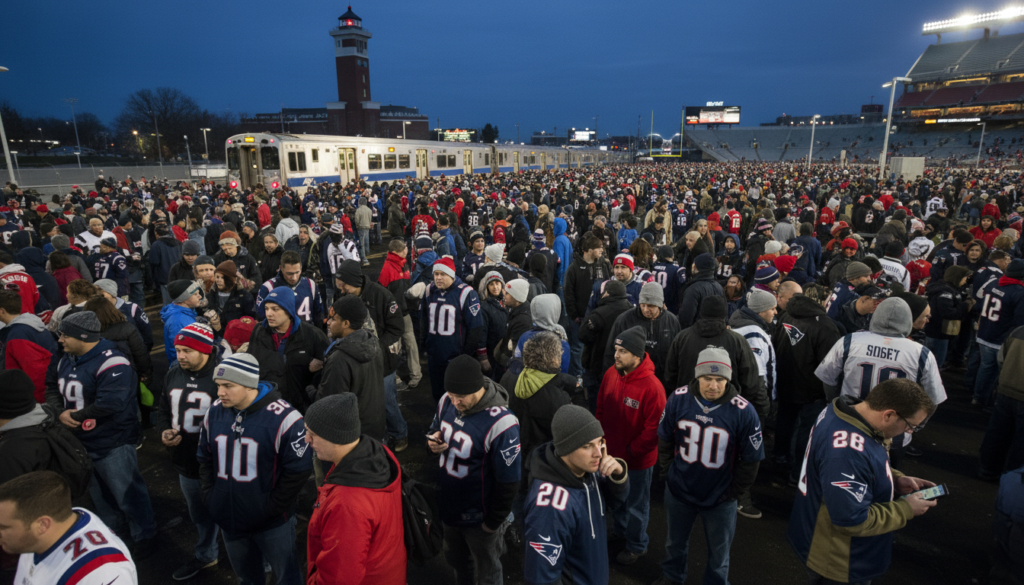
Picture this scenario. The referee blows the final whistle. Your team just won a nail-biting match. You and eighty thousand other fans simultaneously pull out your smartphones to text your families, order a rideshare, and upload celebration videos to social media.
What happens next is entirely predictable. The local cellular network completely collapses. The cell towers become overloaded like a tiny lifeboat trying to carry far too many passengers. Your screen freezes, your texts fail to send, and you are suddenly disconnected from the rest of the world. If a medical emergency happens in this exact moment, or if you lose your passport in the chaos, you cannot rely on a quick Google search to save you. You need critical information already stored in your brain and on your device.
The One Lifeline You Must Remember Across All Borders
If you remember absolutely nothing else from this entire guide, burn this single piece of information into your memory. Across the United States, Canada, and Mexico, there is one unified emergency number.
Dialing 911 in the United States and Canada
You do not need to memorize a complicated list of different phone numbers for police, fire, or medical emergencies as you cross the northern border. Whether you are walking through the streets of Toronto, grabbing a coffee in Seattle, or exploring the monuments in Washington D.C., the magic number is simply 911.
In both the US and Canada, dialing this number connects you instantly to highly trained local dispatchers who can pinpoint your location and send immediate help. It is a seamless, incredibly efficient system designed to save lives. Even if your phone has no active SIM card or you are locked out of your regular carrier network, any mobile phone will force a 911 call through any available local tower.
How 911 Works for Tourists in Mexico
What about the southern host cities? For decades, Mexico had a confusing patchwork of different emergency numbers depending on the state or municipality you were visiting. Thankfully, those days are over. Since 2017, Mexico has adopted 911 as its absolute nationwide standard.
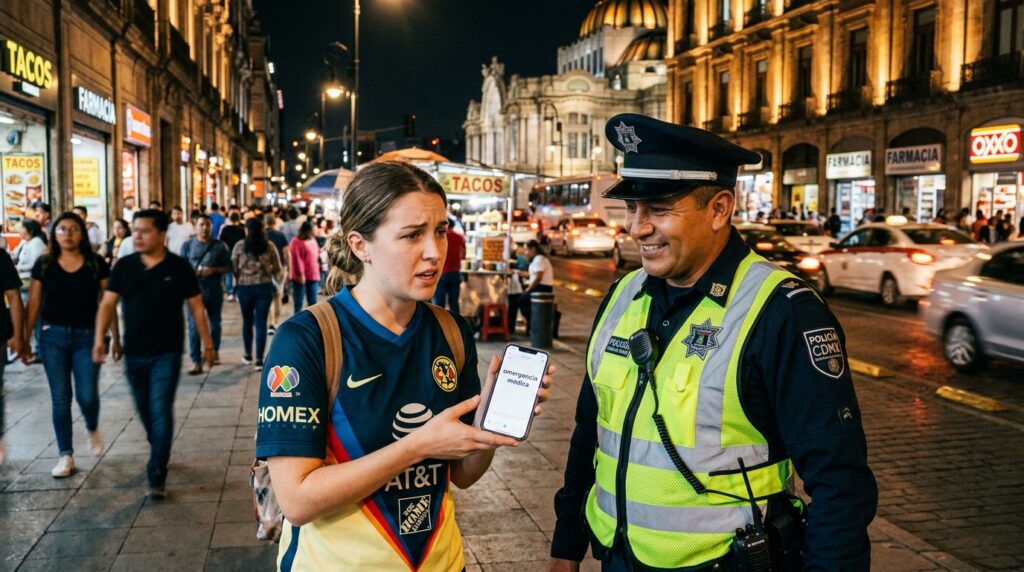
If you are attending a match in Mexico City, Guadalajara, or Monterrey, dialing 911 will route you directly to the correct local authorities. However, there is a crucial caveat you must prepare for as an international tourist. While the system works perfectly, not all Mexican emergency operators speak English fluently. If you do not speak Spanish, try to learn a few basic emergency phrases before your trip, or hand your phone to a bilingual local who can translate your situation to the dispatcher.
Crucial Backup Contacts for Your Embassy
Calling 911 is for immediate, life-threatening emergencies. But what happens if you face a massive logistical nightmare? What if your wallet is stolen on the subway, or you leave your passport in the back of a taxi? You need your embassy.
The Smart Traveler Enrollment Program for US Citizens
If you are a United States citizen traveling to matches in Canada or Mexico, you need to be proactive. Before you even head to the airport, enroll in the free Smart Traveler Enrollment Program. This brilliant system registers your trip with the nearest US Embassy or Consulate. If there is a natural disaster or civil unrest, they know exactly where you are and how to reach you.
Furthermore, you need to save these essential backup numbers directly into your phone contacts right now. If you need urgent embassy help with lost passports or serious legal issues, dial 1-888-407-4747 if you are calling from within the US or Canada. If you are calling from overseas or Mexico, you must dial +1-202-501-4444. These numbers are your direct lifeline back home.
Essential Emergency Help for Canadian Travelers
Canadian citizens are not left out in the cold, either. The Canadian government provides exceptional support for its citizens traveling abroad for these global events. If you find yourself in deep trouble in the United States or Mexico, you have a dedicated hotline.
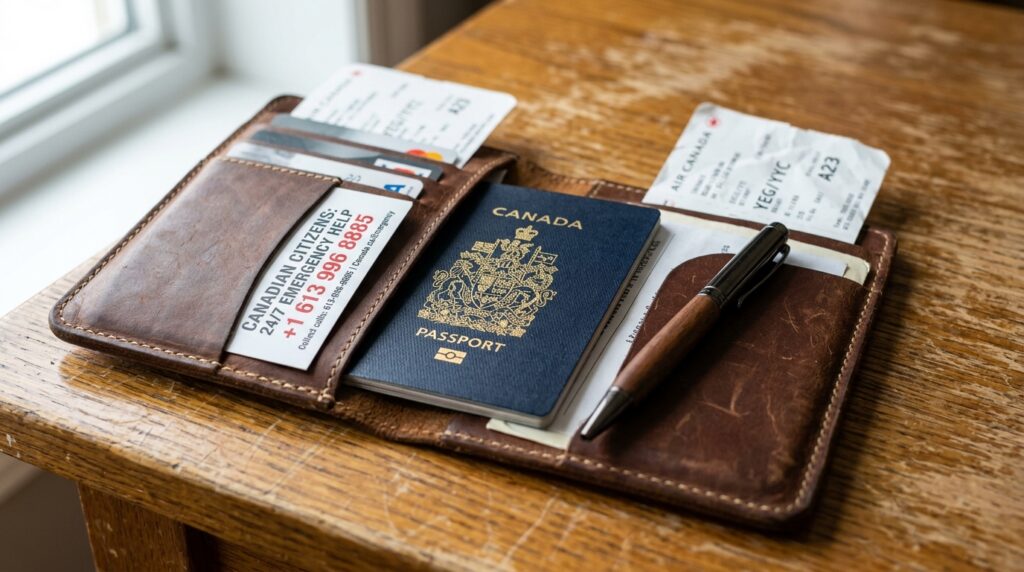
You must immediately dial the 24/7 Emergency Watch and Response Centre at +1 613 996 8885. This dedicated team operates around the clock to assist Canadians with stolen travel documents, medical emergencies, or urgent security situations. Do not assume you can look this number up later. Save it in your phone under an obvious name like “Canadian Emergency Help,” so it is ready at a moment’s notice.
Dialing 078 for Free Tourist Assistance in Mexico
Mexico takes tourist safety incredibly seriously, and they offer a fantastic, specialized service just for international visitors. If you need non-life-threatening assistance while visiting the Mexican host cities, you should dial 078 from any local phone.
This amazing number connects you to the Ángeles Verdes, or the Green Angels, as well as general tourist assistance. They can help you locate the best local hospitals, navigate complicated airport logistics, or connect you directly with your specific embassy. It is essentially a free, government-sponsored concierge service designed specifically to keep travelers safe and informed.
Must Have Offline Apps to Keep You Safe and Connected
We have established that you cannot trust the cellular networks on game day. Therefore, the smartest move any tourist can make is downloading offline-first apps long before they board their flight. Your smartphone is only as smart as the data it holds when the Wi-Fi disappears.
Related Post: Is the Roof Open or Closed at NRG Stadium for Summer Matches
Breaking Down Language Barriers with Offline Translation
Communication is everything during an emergency. If you need a pharmacist in Monterrey to understand your allergy, or a security guard in Montreal to point you toward the medical tent, you cannot let a language barrier slow you down.
Download the Google Translate app immediately. But do not stop there. You must dive into the app settings and manually pre-load the offline language packs for Spanish and French. By downloading these data packs directly to your device, your phone can instantly translate text, voice, and even live camera feeds without needing a single byte of cellular data. It is like carrying a fluent translator in your front pocket.
Navigating Host Cities Without a Wi-Fi Connection
Getting lost in an unfamiliar city is intimidating. Getting lost when you have no internet access to check your map is terrifying. Do not be the tourist standing on a street corner staring blankly at a spinning buffering wheel.
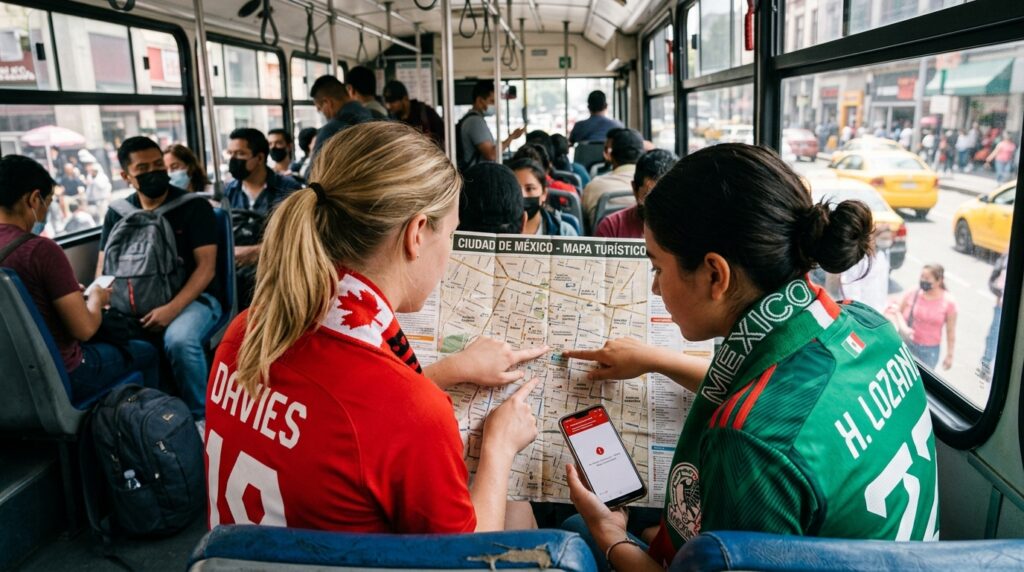
Whether you prefer Google Maps or Apple Maps, you need to utilize their offline features. Before your trip, download the specific city maps for every host city you plan to visit. Cache the data for Toronto, Los Angeles, Mexico City, and everywhere in between. This allows your phone’s internal GPS to guide you flawlessly through the streets, locate the nearest hospital, or find the closest police station entirely offline.
Messaging Family Back Home Cheaply
Keeping your loved ones updated is a crucial part of travel safety. Traditional SMS text messages and international phone calls can cost an absolute fortune depending on your roaming plan.
WhatsApp is the undisputed king of international communication. It relies purely on data or Wi-Fi, allowing you to send cheap or entirely free messages, voice notes, and photos to your family back home. Whenever you find a stable Wi-Fi connection at a coffee shop or your hotel, use WhatsApp to check in and let everyone know you are safe.
Surviving the Post-Match Gridlock Like a Pro
Now, let us bring it all back to the stadium experience. You know how to call for help, and you have your city maps downloaded. But navigating the intricate, chaotic footprint of a massive sports complex after a game is a completely different beast.
Why the Stadium Route App is Your Ultimate Digital Guide
General map apps are fantastic for finding a restaurant, but they are notoriously terrible at navigating the complex interior walkways, security gates, and pedestrian bridges of a massive sporting venue.
This is exactly where the Stadium Route Fan Travel Map app becomes your most valuable digital asset. This app is custom-built for exactly this scenario. It provides you with full, deeply detailed offline navigation inside the actual venues. When the networks inevitably collapse after the final whistle, the Stadium Route app seamlessly guides you along the safest walking routes, points you toward the designated rideshare zones, and helps you bypass the dangerous, overcrowded bottlenecks. It keeps you moving safely while everyone else is standing still.
Final Security Steps Before You Pack Your Bags
You have your numbers saved and your apps downloaded. Before you zip up your suitcase and head to the airport for the 2026 matches, there are two final, non-negotiable steps you must take to guarantee your safety.
Sharing Your Live Location with Loved Ones
Do not disappear off the grid. Use the built-in features on your smartphone to share your live location indefinitely with a trusted family member or close friend back home. If you ever miss a flight or fail to check in after a match, they can pinpoint your last known location and alert the authorities on your behalf.

Securing Travel Insurance with Medical Evacuation
Finally, we need to talk about the boring but essential paperwork. Do not travel across North America without comprehensive travel insurance. A broken ankle from slipping on a stadium staircase or an unexpected illness can result in absolutely massive, financially devastating medical bills, especially in the United States.
When you purchase your policy, read the fine print carefully. Ensure that your plan specifically includes coverage for medical evacuation. If you suffer a severe emergency and need to be flown back to your home country for specialized care, a medical evacuation flight can cost upwards of fifty thousand dollars. Your travel insurance should absorb that blow, allowing you to focus purely on your recovery.
Ending Lines
Traveling to the epic 2026 global football events across the United States, Canada, and Mexico is a thrilling privilege. By preparing for the inevitable cell service crashes and familiarizing yourself with the vital emergency protocols, you transform yourself from a vulnerable tourist into a seasoned, street-smart traveler. Remember that 911 is your universal lifeline across all three borders, keep your embassy contacts saved, and leverage the 078 tourist hotline in Mexico.