 USA
USA Mexico
 Canada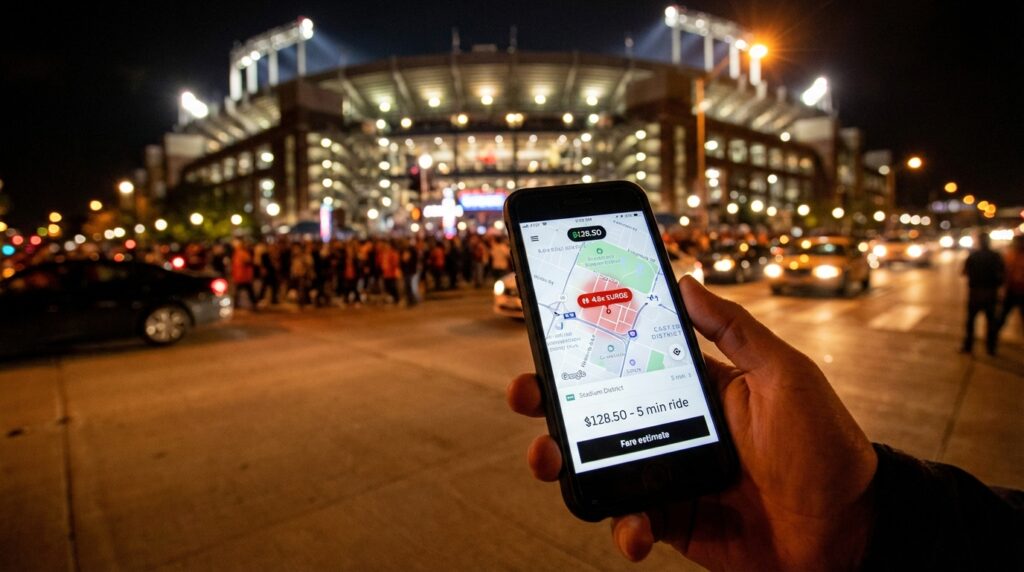
Have you ever walked out of a massive stadium feeling like you are absolutely on top of the world, only to pull out your phone and feel your stomach drop to the pavement? You just witnessed an incredible match, your adrenaline is pumping, and all you want is a quick ride back to your hotel. But then you look at your rideshare app. That simple trip home has suddenly morphed into one of the most painfully expensive parts of your entire game day experience.
We have all been there. Uber surge pricing after major sporting events is a notorious budget killer. As we gear up for the massive 2026 North American football tournament and other colossal stadium events, understanding this financial trap is more critical than ever.
Why Your Ride Home Suddenly Costs a Fortune
Imagine a massive dam bursting. The water does not just trickle out; it floods everything in its path instantly. That is exactly what happens when a final whistle blows and 70,000 screaming fans flood out of the gates at the same time.
The Math Behind the Multiplier Madness
Rideshare platforms operate on a simple principle of supply and demand. On a normal Tuesday afternoon, there are plenty of drivers and only a handful of riders. Fares are low and predictable. But on game day, that equation violently flips. You suddenly have tens of thousands of people demanding a ride from the same one-mile radius, while the number of available drivers remains relatively flat.
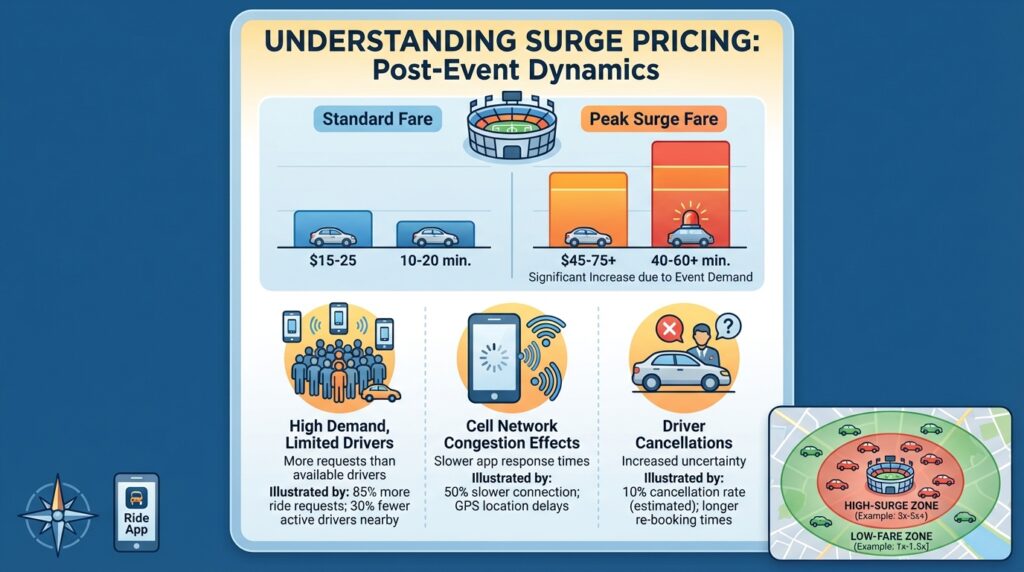
The algorithms running these apps are designed to react instantly. They sense this overwhelming flood of requests and aggressively crank up the prices. We are not talking about a gentle bump of a few dollars. Normal fares routinely multiply by three to five times their standard rate within mere minutes of the game ending. Sometimes, it goes even higher.
Real Stadium Stories of Rideshare Sticker Shock
Let us look at some real-world examples that might make you wince. Imagine you are attending a massive international match at MetLife Stadium in New Jersey. Under normal circumstances, a standard ride back across the river to Manhattan might run you about $40. But step out of that stadium right after a game, and you will easily see that same ride jumping to $150 or more.
The story is the same across the continent. At Levi’s Stadium in California, a quick 15-minute trip down the road has been known to hit $80 during the post-game rush. Following major global championship events at venues like Hard Rock Stadium in Miami, NRG Stadium in Houston, or SoFi Stadium in Los Angeles, short trips that normally cost a completely reasonable $25 to $40 can spike to anywhere between $100 and $180. These are not exaggerated horror stories; they are the standard reality of event day logistics.
The Perfect Storm for Rideshare Algorithms
Surge pricing does not happen in a vacuum. It is the result of a perfect storm of modern technology, urban planning, and human behavior all crashing together at once.
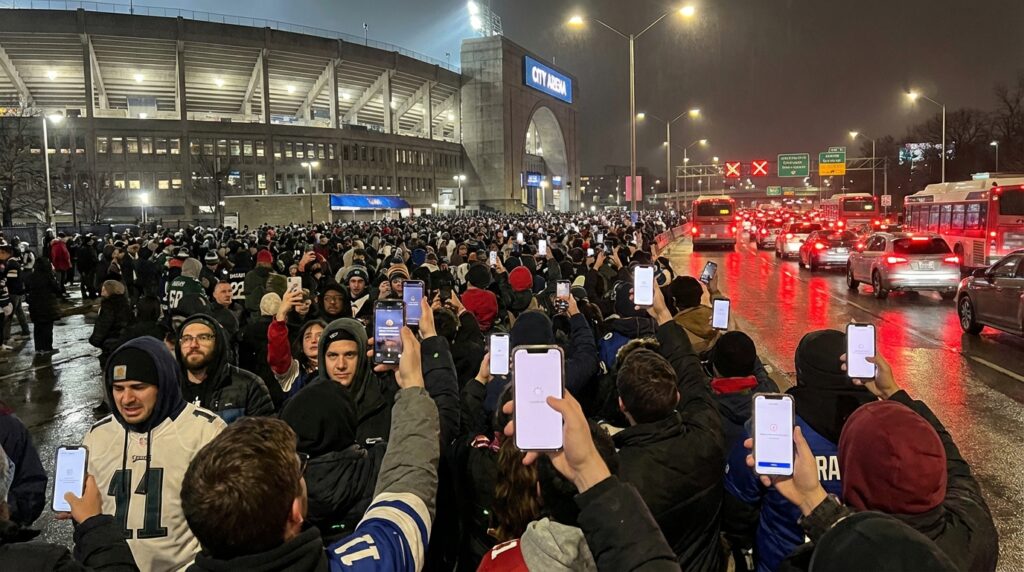
When Thousands of Fans Exit at the Exact Same Time
Unlike a theme park where people trickle out over several hours, a sporting event has a hard stop. Everyone leaves simultaneously. The rideshare algorithm views this massive, synchronized demand as an emergency. It raises prices not just to make more money, but theoretically to entice more drivers to come to the area. However, the sheer volume of people makes it impossible for the supply of cars ever to meet the demand of the crowd.
Dropping Bars and Collapsing Cell Service
Adding fuel to this expensive fire is the reality of stadium infrastructure. Have you ever tried to send a simple text message from inside a packed arena? It often refuses to send. When 70,000 people try to use the local cell towers at the same time, the network collapses under the weight.
You are standing in the dark, furiously tapping your screen, watching your battery drain, trying desperately to lock in a ride. By the time your app finally connects to the server, the surge multiplier has already skyrocketed. Cashless stadiums and digital-only ticketing mean our phones are already working overtime, leaving us incredibly vulnerable when it is time to arrange a ride home.
Looking Ahead to the Massive 2026 Football Tournament
As we look toward the summer of 2026, when the entire continent hosts the biggest football tournament on the planet, this problem is going to take center stage. Millions of international fans will be descending upon cities they are completely unfamiliar with, relying heavily on apps to get around.
Are Price Caps Coming to the Rescue
The good news is that people are starting to notice how out of hand this has become. For host cities anticipating the 2026 crowds, local lawmakers are starting to push back. In places like Washington, there are already serious proposals for legislation to cap rideshare surges. Some proposals suggest limiting the surge to a maximum of 20 percent above what the driver actually earns, preventing the apps from taking massive, disproportionate cuts during high-demand events.
Why You Need a Rock Solid Game Day Strategy
While legislative caps sound great in theory, you cannot rely on politicians to save your travel budget. You need to take matters into your own hands. Relying on an app to catch a ride at the stadium gates is a recipe for extreme stress and serious budget shock. You need a strategy before you even scan your ticket at the entrance.
The Hidden Costs Beyond the Dollar Amount
When we talk about the true cost of Uber surges, we usually focus on the money. But the financial hit is only one part of the painful equation.
The Waiting Game and Post-Match Exhaustion
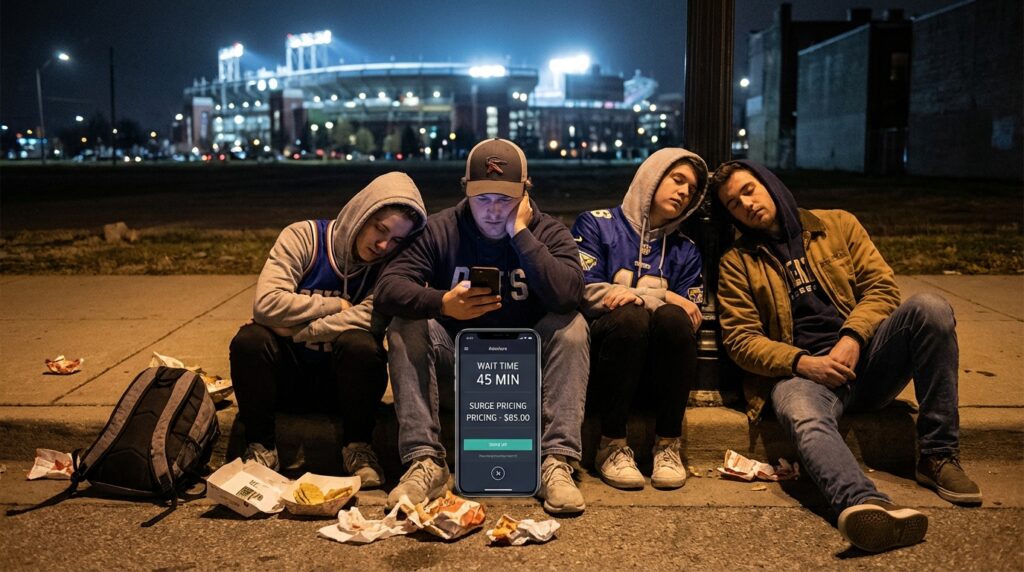
Think about how you feel after a tense, three-hour sporting event. You have been cheering, jumping, walking up ramps, and eating stadium food. You are exhausted. The last thing you want to do is stand in a chaotic, poorly lit parking lot for 45 minutes.
Even if you agree to pay the $150 surge price, you are still going to wait. The roads around the stadium are locked in gridlock. Your driver is stuck in traffic two miles away. The stress of trying to find a specific silver sedan in a sea of thousands of identical silver sedans while exhausted is a hidden tax on your sanity.
Drivers Chasing the Bigger Surge
There is another frustrating element to this game. Drivers are smart; they know how the algorithm works, too. Reports from major sports complexes have highlighted a maddening trend where drivers will accept your ride, only to cancel it a few minutes later. Why do they do this? Because they see the surge multiplier increasing in real-time. They cancel your 3x ride to scoop up a 5x ride from someone else standing just a few feet away. It is a ruthless digital marketplace, and the exhausted fan is the one who loses.
How to Outsmart the Rideshare Surge
So, what is the savvy sports traveler to do? Do you accept your fate and hand over your wallet? Absolutely not. You can easily bypass this digital extortion with a little bit of strategic planning.
The Strategic 15 Minute Walk
This is the greatest secret of stadium travel. The rideshare surge is highly localized. It is a tight geographic bubble surrounding the stadium footprint. If you walk 10 to 15 minutes away from the main gates, heading toward a nearby hotel, a local restaurant, or a residential neighborhood, you can literally walk right out of the surge zone.
By the time you reach a quiet corner a mile away, not only have prices significantly dropped, but your driver can actually reach you without getting trapped in the stadium traffic nightmare. It is good for your wallet, good for your blood pressure, and a nice way to stretch your legs after the match.
Related Post: Avoiding Foreign Transaction Fees While Traveling in Mexico
Embracing Public Transit and Shuttles
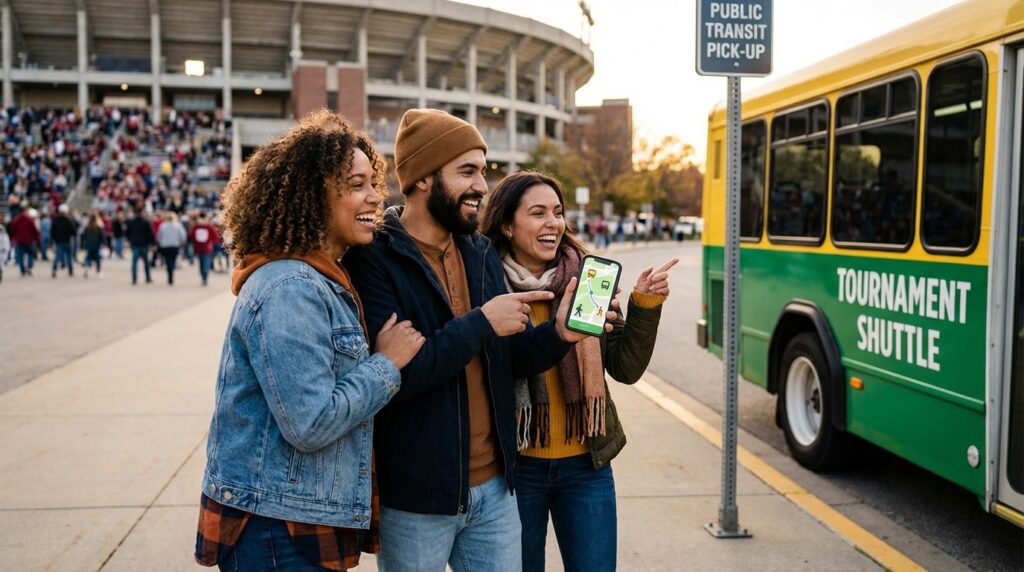
The absolute best way to beat the surge is to opt out of the rideshare game entirely. Most major stadiums have dedicated public transit links or specific shuttle buses designed to move massive volumes of people quickly. Whether it is a light rail system, a subway extension, or a fleet of municipal buses, these options cost a tiny fraction of a rideshare. They are entirely immune to surge pricing algorithms.
Alternatively, if you have the time, you can wait it out. Grab a drink at a nearby bar or tailgate with friends for 45 to 60 minutes. Once the initial wave of the crowd disperses, the algorithm relaxes, and prices return to something resembling reality.
Your Ultimate Secret Weapon for 2026
Knowing these tips is great, but executing them in a foreign city when your cell service is completely dead is a different challenge altogether. That is exactly why we built a specific tool to solve this exact logistical nightmare.
Navigating the Chaos with Stadium Route
For all your upcoming 2026 travel, your smartest move is to pre-download the offline Stadium Route app. We designed this platform specifically for the chaotic reality of mega-events. We know your cell service is going to crash. We know the rideshare prices are going to spike.
With Stadium Route, you can instantly map out safe escape routes away from the stadium bubble without needing a single bar of cell service. The app highlights exact shuttle stops, details the nearest public transit options, and provides clear, step-by-step walking directions to safe zones where rideshare prices normalize. It is like having a seasoned local guide right in your pocket, steering you away from the financial traps and guiding you smoothly back to your hotel.
Final Thoughts on Protecting Your Game Day Budget
Attending a massive global sporting event is a bucket-list experience. You have already spent your hard-earned money on flights, accommodations, and those precious match tickets. Do not let a predatory rideshare algorithm ruin your night and drain your travel funds at the very last minute.