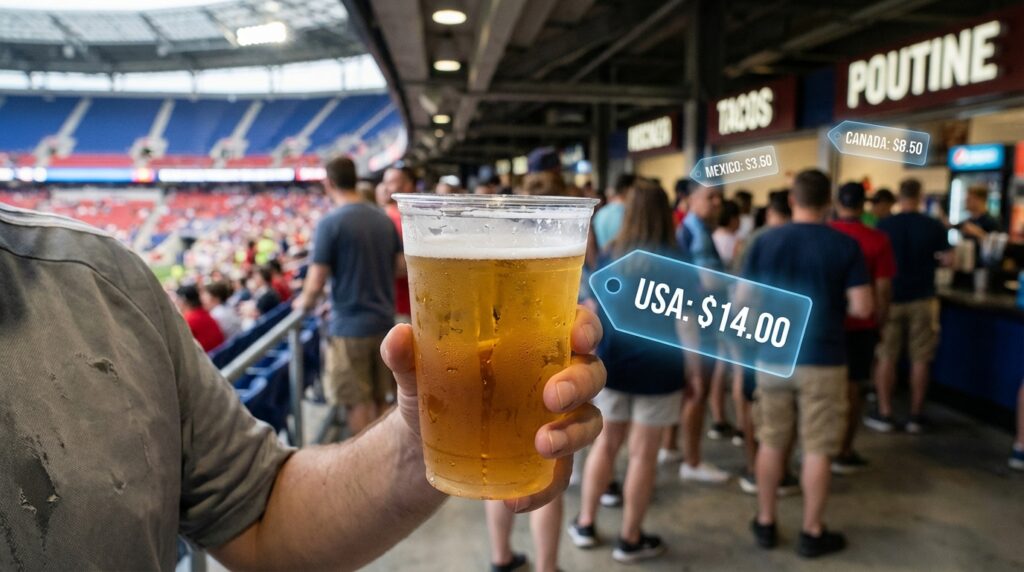
 USA
USA Mexico
 Canada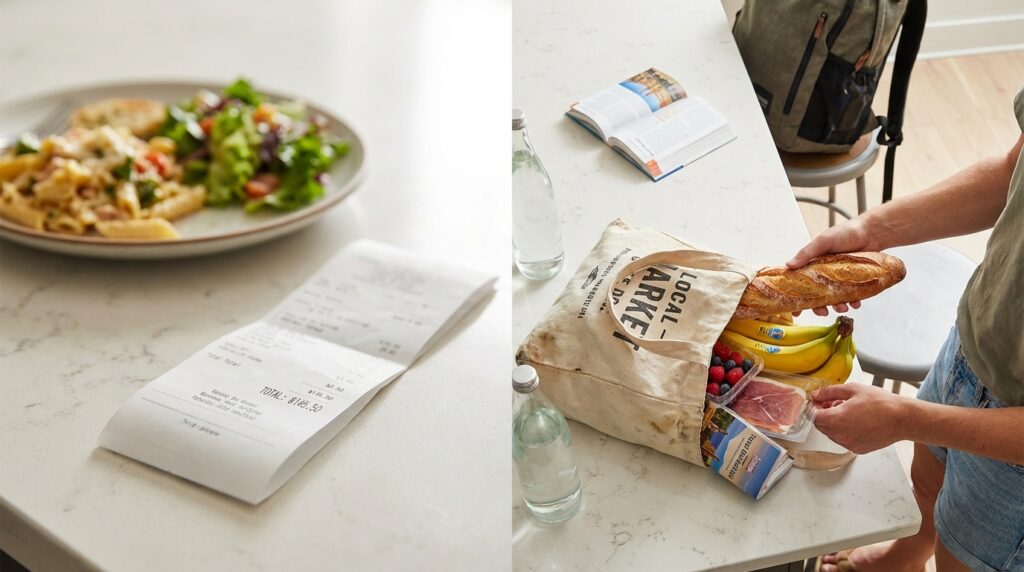
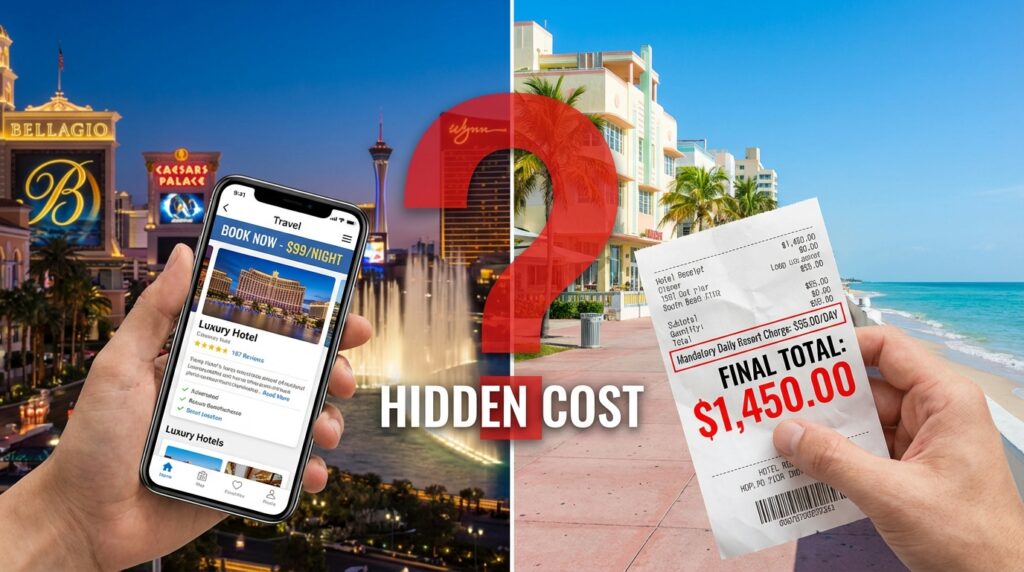
Have you ever looked at a restaurant bill while on vacation and felt your jaw literally hit the floor? We have all been there. You are having the time of your life, soaking up the atmosphere of a massive sporting event, and then boom. A simple lunch for two suddenly costs as much as a new pair of sneakers.
Eating out every single day during a multi-week tournament quickly turns a totally manageable trip into an absolute financial nightmare across all sixteen host cities.
Let us dive deep into the real math of feeding yourself during the biggest sporting event on the planet. Think of your travel budget like a bucket of water. Restaurant dining and stadium food are the giant holes at the bottom draining your cash. We are going to plug those holes right now.
The Hidden Cost of Feeding a Football Fan
Picture this scenario. You wake up in a new city, grab a quick $15 breakfast at a cafe, spend $35 on a sit-down lunch near a tourist trap, and then drop another $40 on dinner and drinks after the match. Before you even blink, you are spending well over $90 a day just on food. Multiply that by a ten-day trip, and you are bleeding cash.
Why Restaurant Bills Destroy Your Travel Budget
Restaurants in host cities know exactly what is happening when a major tournament rolls into town. They understand the massive influx of tourists, and inevitably, prices around popular areas and fan zones inflate. You are paying a premium for convenience and location. When you factor in taxes, tips, and the sheer volume of meals you need to eat over a multi-week trip, eating out three times a day becomes completely unsustainable for the average fan.
The Stadium Concession Stand Trap
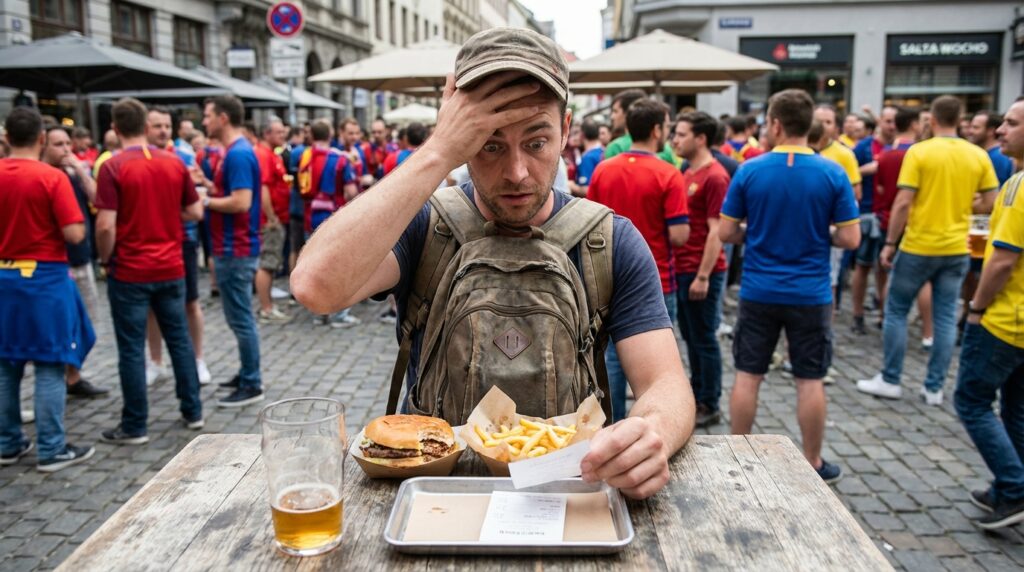
If you think city restaurants are expensive, wait until you step inside the arena. Stadium food is notoriously marked up everywhere on the planet. You are a captive audience. When you are hungry at halftime, you do not have a choice but to pay exorbitant prices for mediocre food. We are talking about basic hot dogs and simple sodas that cost as much as a gourmet meal back home. Skipping the concession stand entirely is one of the fastest ways to keep your travel budget intact.
Crunching the Numbers Across North America
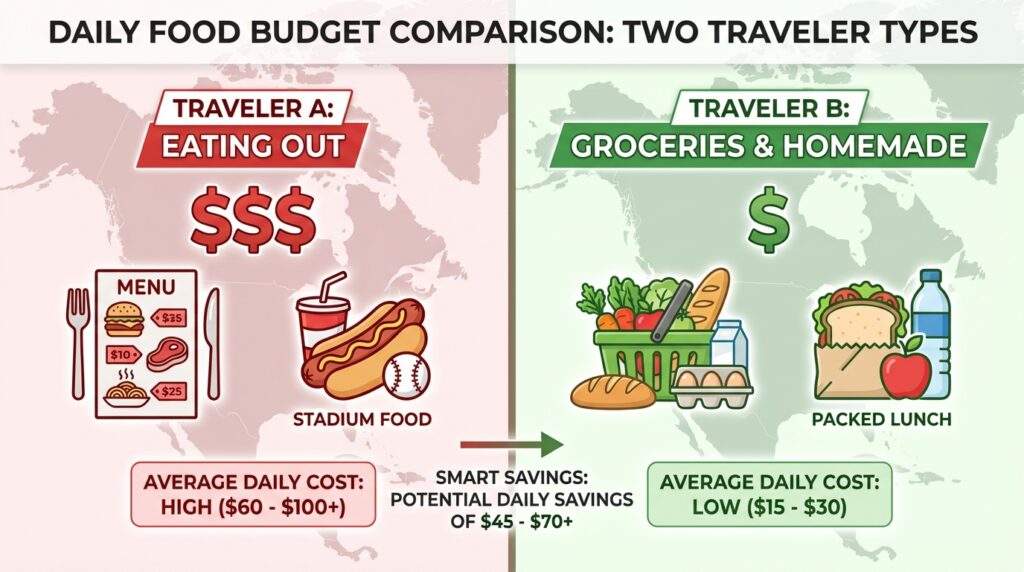
The beauty of the 2026 tournament is that it spans three entirely different countries, each with its own economic landscape. However, the golden rule of saving money remains the same whether you are in the deep south of the United States or the vibrant streets of Mexico. Buying groceries and self-catering consistently cuts your daily food costs by a massive $20 to $40 per person.
Maximizing Your Pesos in Mexican Host Cities
Let us talk about the incredible Mexican host cities like Mexico City, Guadalajara, and Monterrey. The savings here are absolutely dramatic. If you eat out at sit-down tourist spots, you can easily spend $40 to $60 a day. But if you pivot your strategy? Magic happens.
By hitting up vibrant local street markets or massive supermarkets like Walmart, you can easily stock up on fresh ingredients, incredible local fruit, and simple pre-made meals for just $15 to $25 a day. You can build a mountain of authentic, delicious food in your rental kitchen for a fraction of the cost of a restaurant.
Surviving the Sticker Shock in United States Venues
The United States presents a different kind of financial challenge. Fans traveling to cities like Houston, Seattle, and Atlanta consistently report intense sticker shock when eating out three times a day, easily pushing past $55 daily.
Smart travelers flip the script. They head straight to Costco, local grocery chains, or neighborhood markets. By filling a cooler with cold cuts, fresh bread, snacks, and bulk beverages, they keep their daily food costs well under $30. You snag a great room at one of those transit-friendly hotels in New Jersey for the big MetLife games. If that room happens to have a mini-fridge and a microwave, you just struck gold. You can prep your meals right there by the transit hub, jump on the train, and save your money for the actual merchandise and experiences.
Navigating High Food Costs in Canadian Hubs
We have to be honest about the Canadian venues in Toronto and Vancouver. They are generally the priciest cities on the entire tournament map. Eating out here will drain your wallet faster than almost anywhere else. But do not panic. Even in these expensive metropolitan hubs, a quick supermarket run still saves you roughly 30 to 50 percent compared to eating at restaurants. Every dollar saved in Toronto is a dollar you can spend on an extra match ticket or a better seat.
Smart Accommodation Choices Save You Thousands
Your food budget actually starts the moment you book your place to sleep. If you book a standard hotel room with zero amenities, you are forcing yourself to eat at restaurants. You are trapping yourself in an expensive cycle.
Booking Places with Kitchens and Fridges
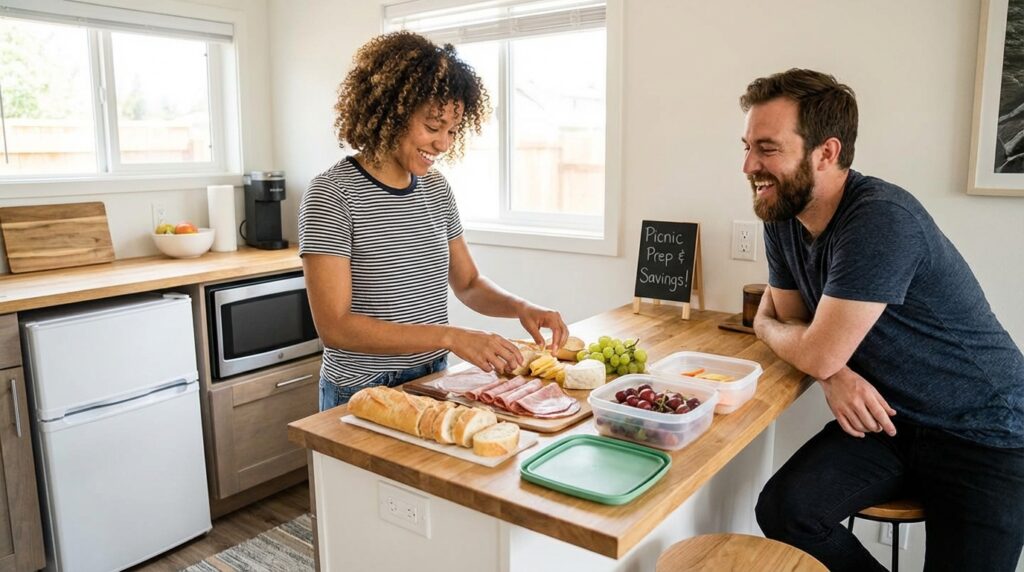
The absolute smartest play for multi-match stays is to book accommodation that supports your grocery strategy. You need to actively hunt for Airbnbs, vacation rentals, or extended-stay hotels that offer a kitchen, or at the very absolute minimum, a reliable mini-fridge and a microwave. This simple booking decision is the foundation of your entire budget strategy. It gives you the power to control your food environment.
Your Day One Supermarket Strike Plan
Do not wait until you are starving on day three to figure out your food situation. You need a strike plan. The very day you arrive in your host city, drop your bags and immediately hit the nearest local market or grocery store.
Treat this first shopping trip like a vital mission. Stock up on the heavy essentials right away. Grab cases of water, bulk snacks, breakfast items like oatmeal or yogurt, and easy-to-assemble lunch ingredients. By establishing your food base camp on day one, you remove the daily stress of figuring out where to eat and how much it will cost.
Prepping Fan Zone Picnic Lunches
Host cities are going to be alive with incredible fan zones, public viewing areas, and massive street parties. These areas will be packed with overpriced food trucks. Be the smartest fan in the crowd. Prep simple meals, hearty sandwiches, or picnic-style lunches in your room before you head out. Pack them in a lightweight bag and take them directly into the fan zones. You get to enjoy the same incredible atmosphere as everyone else, but you are eating a delicious, budget-friendly meal while they wait in line to overpay for fries.
Outsmarting the Crowds with Stadium Route
Knowing that you need to go to a supermarket is easy. Actually finding that supermarket in a massive, unfamiliar foreign city while surrounded by hundreds of thousands of screaming fans is a totally different challenge.
Why Offline Maps Are Your Best Friend
When massive crowds gather for these global tournaments, the local cell phone towers get completely overwhelmed. Your signal will drop, your maps will freeze, and you will be left wandering the streets unquestioningly. You cannot rely on a live internet connection to find your way around on game day.
Finding the Closest Grocery Stores Instantly
This is exactly why you need to pre-download the offline Stadium Route app well before you travel in 2026. We built this tool specifically for the logistical chaos of massive sporting events.
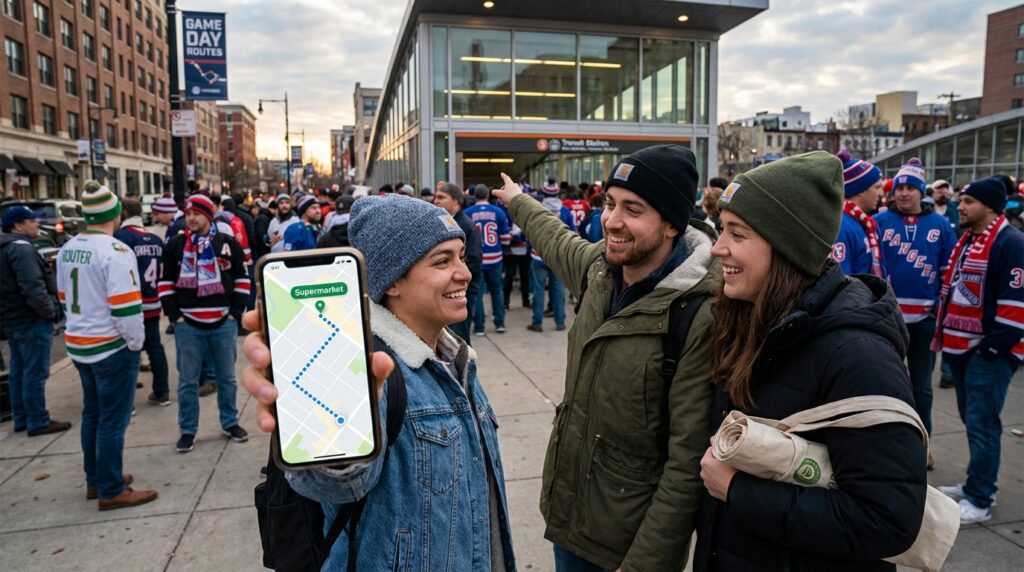
Even when the cell service completely collapses under the weight of the massive crowds, Stadium Route works flawlessly. You can instantly open the app, map the closest budget-friendly supermarkets to your accommodation, and find the safest, most efficient walking routes back to your Airbnb with your hands full of groceries. It acts as your invincible digital guide, ensuring you can always execute your budget-saving plans no matter how crazy the city gets.
Related Post: The True Cost of Uber Surges After Major Sporting Events
Ending Lines
Attending the 2026 North American football tournament should be about making lifelong memories, not stressing over the price of a sandwich. By treating your food budget strategically, choosing the right accommodation, and embracing the power of the local grocery store, you take complete control of your travel finances. Remember, every dollar you save by avoiding overpriced stadium food and tourist-trap restaurants is a dollar you can put toward the experiences that actually matter. Download your offline tools, map out your local markets, and get ready to enjoy the beautiful game without going broke. Travel smart, eat well, and enjoy the matches.