 USA
USA Mexico
 Canada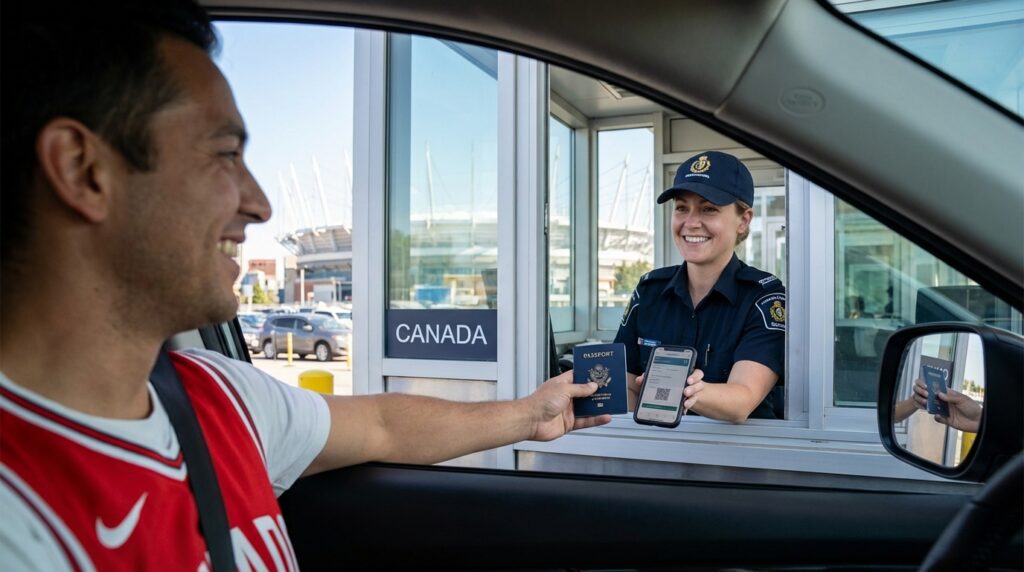
Have you ever felt your heart suddenly start racing as you pull your rental car up to a heavily fortified international border booth? We have all been there. Even when you are carrying nothing more dangerous than a few extra team jerseys and a bag of road trip snacks, talking to a uniformed federal officer can feel incredibly intimidating.
As we gear up for the massive 2026 global football tournament spread across North America, millions of passionate fans are going to be making the scenic drive between the United States and Canada. You might be watching a spectacular match at a major New Jersey stadium one night and then driving straight up to Toronto to catch another match the very next day. Crossing the longest undefended border in the world is actually a remarkably straightforward process. However, if you stumble over your words or give the wrong impression, you can easily turn a five-minute conversation into a two-hour nightmare. Let us pull back the curtain, look at exactly what these officers want to know, and teach you how to cross the border like an absolute professional.
The Reality of Crossing the Northern Border for the Big Matches
Think of the international border like an incredibly exclusive nightclub. The agents sitting inside those little glass booths are the bouncers. They have a massive line of people waiting outside, and they only have a few seconds to figure out if you belong inside the club.
Treating the Border Like a Digital Velvet Rope
These officers are not trying to ruin your vacation. They are performing a highly repetitive, incredibly vital security job. They use a specific set of routine questions to quickly verify your identity, understand your true intentions, and decide if your story makes logical sense. When the massive crowds arrive for the 2026 North American matches, these agents are going to be working under intense pressure. Knowing exactly what they are going to ask you before you even roll down your window is your ultimate secret weapon.
Entering the United States: What to Expect from CBP Officers
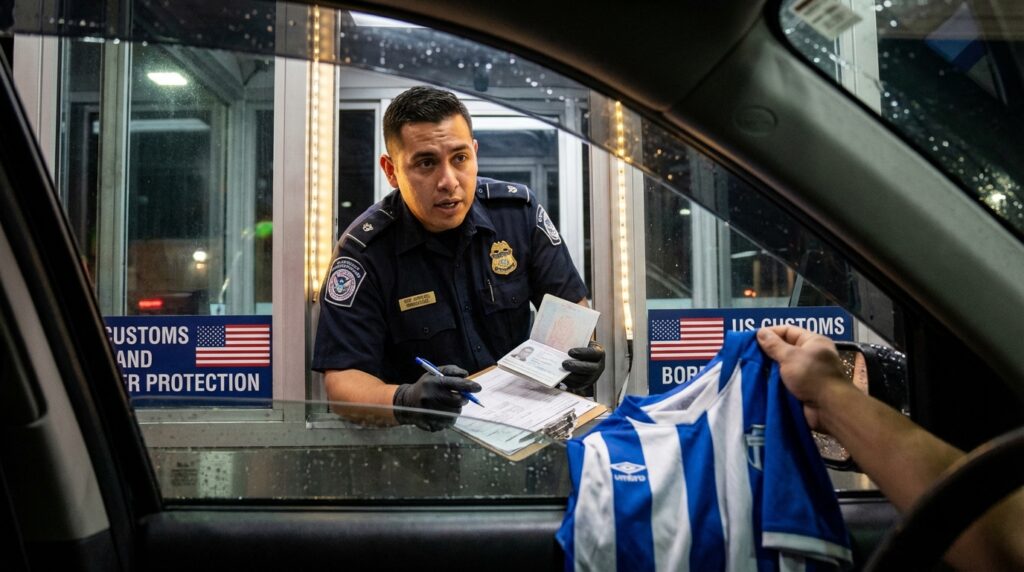
When you drive south from Canada into the United States, you will encounter the officers of US Customs and Border Protection. These agents are sharp, observant, and highly trained to detect nervous behaviour.
The Core Questions About Your Identity and Purpose
The very moment you hand over your passports, the interview begins. The officer will look at your documents, look you directly in the eye, and ask a variation of the following questions.
First, they will ask, “Where do you live?” Answer this simply with your city and country of residence. Do not give them your full postal address unless they specifically ask for it.
Next comes the most important question of the interaction. They will ask, “What is the purpose of your trip to the United States?” This is where many tourists freeze up and start rambling. You need to answer clearly and confidently. Simply state, “Tourism”. We are attending the global football matches.”
They will follow this up by asking, “How long will you stay and when do you plan to return?” Tell them your exact departure date. Finally, they will ask, “Where are you staying?” You must have the name of your hotel or the city of your vacation rental ready to go. Do not say “I do not know yet.” That is a massive red flag.
Declaring Your Goods and Cash Honestly
After they establish why you are visiting, they transition to what you are bringing with you. The officer will ask if you are bringing any food, alcohol, tobacco, weapons, or agricultural products into the country.
They will also ask a very specific financial question. “Are you carrying more than ten thousand US dollars in currency?” If you are, you must declare it. It is not illegal to travel with large amounts of cash, but it is highly illegal to lie about it to a federal officer. Answer truthfully, declare your snacks, and you will usually be waved right through.
Entering Canada: Facing the CBSA Officers
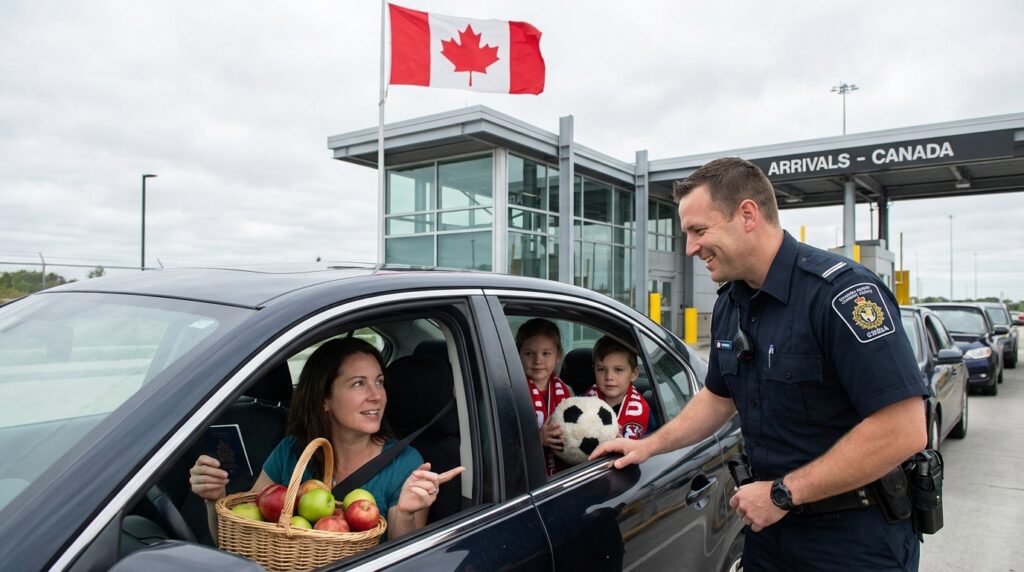
When you drive north into the beautiful Canadian provinces, you will be greeted by officers from the Canada Border Services Agency. The experience feels remarkably similar to the American side, but they have their own specific areas of focus.
Identical Themes with a Focus on Prohibited Items
The Canadian agents will ask you the same foundational questions. They want to know the specific purpose of your trip to Canada, how long you intend to stay, and exactly where you will be sleeping. Tell them you are heading up to watch the tournament matches in Vancouver or Toronto. Mentioning the specific games actually helps your case because it gives the officer a totally logical, verifiable reason for your sudden international road trip.
However, Canada is incredibly strict about what crosses its borders. The officer will explicitly ask, “Do you have any firearms, weapons, alcohol, tobacco, or goods to declare?” They will also strictly question you about fresh fruits, vegetables, and meats. Do not try to sneak an apple across the border. If they find undeclared food, they will confiscate it and potentially hand you a massive fine.
The Serious Question of Criminal History
Both the American and Canadian officers have complete access to massive international law enforcement databases. They will frequently ask, “Have you ever been arrested, or have you ever been denied entry to this country before?”
This is the ultimate test of your honesty. A minor driving offence from twenty years ago might not prevent you from entering the country, but lying about that offence to a border officer absolutely will get you turned around. Always tell the total truth.
How to Behave at the Checkpoint Window
Knowing the answers is only half the battle. How you physically present those answers matters just as much. Your body language speaks volumes before you even say hello.
Mastering the Art of the Short Answer
Have you ever asked someone what time it is, and they start explaining how a watch is built? Do not do that at the border. The absolute golden rule of talking to an immigration officer is to keep your answers incredibly short and incredibly direct.
If they ask where you live, say “London”. Do not say, “Well, we used to live in Manchester, but then my husband got a job down south, so now we live in London.” Vague, rambling, or overly nervous responses immediately trigger suspicion. The officer will assume you are trying to hide something in a sea of unnecessary words. Give them the exact piece of data they requested, and then wait quietly for the next question.
Physical Body Language and Preparation
You can easily set a positive tone before the officer even speaks to you. As you pull up to the booth, turn your car radio completely off. Tell everyone in the back seat to take off their headphones and stop looking at their phones. Roll down the driver’s side window completely. If you are wearing dark sunglasses, take them off immediately.
The officer needs to see your eyes, and they need to see the faces of every single passenger in the vehicle. Make polite, respectful eye contact. By presenting an organized, respectful vehicle, you instantly lower the officer’s defensive radar.
Preparing Your Paperwork Before You Reach the Booth
Do you want to instantly annoy a federal agent? Wait until you are parked directly in front of them to start desperately digging through your messy glove box looking for your passports.
Passports, Tickets and Proof of Travel
You must have your physical documents ready in your hand before you reach the front of the line. If you are eligible for trusted traveller programmes like NEXUS, have those specific cards ready. Have the passports of every passenger physically open to the photo page.
Beyond your passports, you need to prepare your digital evidence. Officers routinely ask for proof of your travel claims. Have your hotel booking confirmations printed out or saved as screenshots on your phone. Most importantly, have your official digital match tickets ready to display. When you can instantly provide physical proof that you are attending the massive 2026 matches, the officer’s job becomes incredibly easy, and your interview ends significantly faster.
Anticipating Massive Crowds at Major Bridges
No special alternative rules are being implemented for the 2026 tournament. The standard border procedures will remain entirely in place. However, the sheer volume of humanity attempting to cross is going to drastically alter the experience.
The Rainbow Bridge and Peace Bridge Bottlenecks
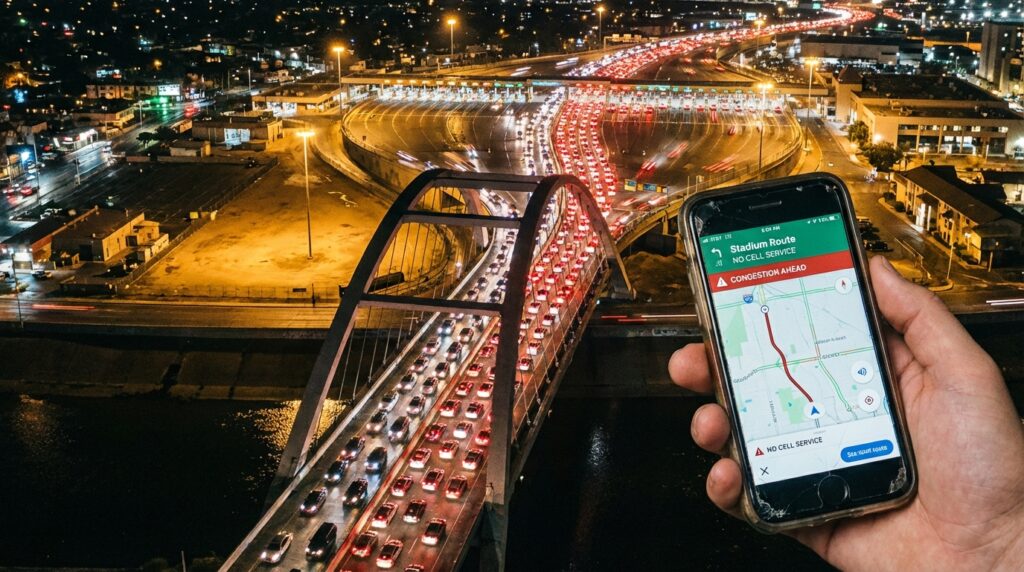
If you are driving between the incredible venues in the Northeastern United States and Toronto, you will likely cross at the legendary checkpoints in the Niagara region, such as the Peace Bridge or the Rainbow Bridge. Because the tournament traffic will be unprecedented, you must expect significantly longer wait times at these specific bottlenecks. You might be sitting in line for hours before you even reach the primary inspection booth. Plan your travel schedule assuming the worst possible traffic delays, and cross early in the morning or very late at night if possible.
Surviving the Dead Zones with Offline Tools
We have to talk about the terrifying technological reality of crossing a land border. When you are sitting in your car, waiting in a massive line of thousands of other vehicles, right on top of an international boundary, your cell phone is going to completely lose its mind.
Why the Stadium Route App Is Mandatory
Your smartphone will frantically try to ping the cellular towers in the United States and the towers in Canada simultaneously. This aggressive digital confusion, combined with the massive crowd of fans doing the same thing, causes the network to collapse. Your online maps will freeze, and your navigation will fail right when you need to figure out which highway takes you to the stadium.
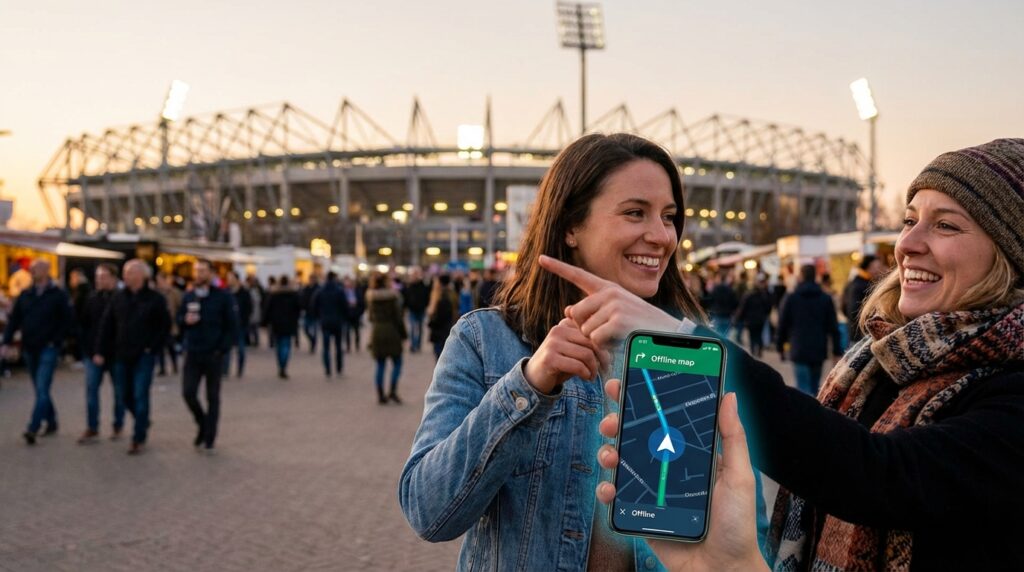
This is exactly why you must protect your travel plans by pre-downloading the offline Stadium Route app before you ever leave your driveway. We built this digital ecosystem specifically to conquer the digital dead zones of massive global events. Because the entire application lives completely on your phone’s hard drive, it functions flawlessly when the border cell towers crash. You can instantly map your border escape routes, find the safest pedestrian paths around the venues, and locate your exact stadium gates without needing a single drop of internet data.
Related Post: Current Pedestrian Wait Times at the San Diego-Tijuana Border
Ending Lines
Driving across the beautiful international border between the United States and Canada is the ultimate North American road trip. It connects the incredible host cities and allows you to experience the true scale of this massive sporting event. Do not let the intimidating uniforms and the security booths ruin your excitement. By understanding exactly what the officers are going to ask, keeping your answers incredibly brief, and having your documents perfectly organized, you transform a stressful interrogation into a simple five-minute chat. Prepare your offline Stadium Route app to conquer the network blackouts, take off your sunglasses, and answer confidently. The greatest football matches in the world are waiting for you on the other side. Travel smart, stay honest, and enjoy the incredible journey ahead.