 USA
USA Mexico
 Canada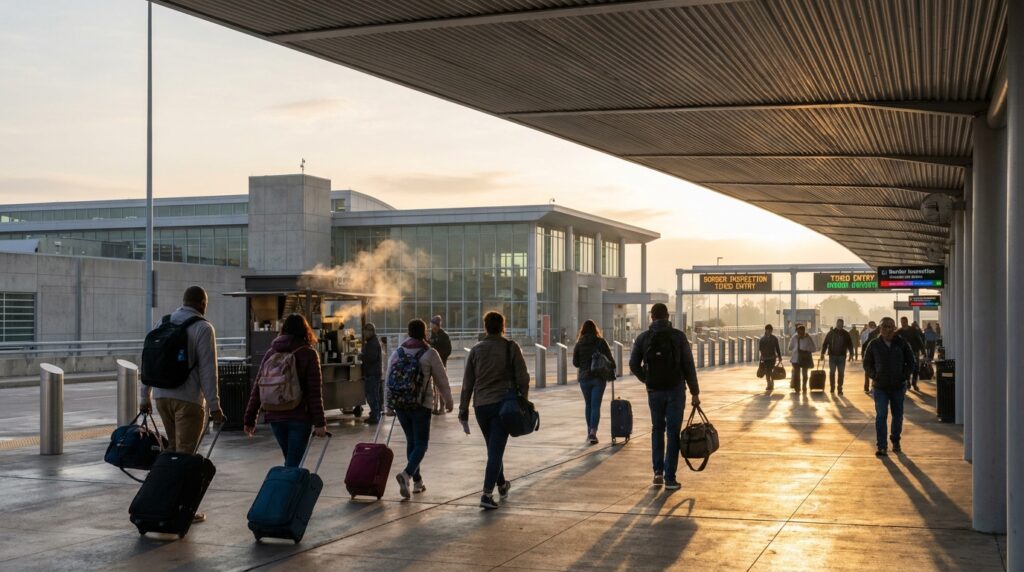
Have you ever stared at a line of people so incredibly long that it literally vanishes over the horizon? Welcome to the ultimate travel bottleneck. If you are preparing to hop between spectacular North American host cities for the massive 2026 global sporting events, you are going to be crossing international borders. And if your travel itinerary takes you between Southern California and the vibrant Baja Peninsula, you are about to encounter the busiest land crossing on the entire planet.
Crossing the San Diego-Tijuana border on foot is a unique experience. It is basically the heartbeat of two massive, interconnected metropolitan areas. But let us be completely honest with each other. If you do not time your crossing perfectly, that heartbeat flatlines into a miserable, agonising wait. Standing in the sweltering sun for hours when you just want to get to your hotel is a guaranteed way to ruin your day. We need to dissect the current, real-time data, look at exactly what is happening at the gates right now, and build you a bulletproof strategy to cross that border like a total professional.
Navigating the Busiest Land Border Crossing on Earth
Before we look at the clock, you have to understand the geography of this massive checkpoint. You are not just walking up to a single turnstile. You are entering a sprawling, complex immigration machine that processes millions of people every single year.
Why the San Ysidro Crossing Determines Your Travel Schedule
When people talk about walking from Tijuana into San Diego, they are almost always talking about the legendary San Ysidro crossing. This is the main artery. It is the default route for tourists, daily commuters, and passionate sports fans travelling between the two nations. However, the flow of traffic here is not perfectly balanced.
Walking southbound into Mexico is usually a complete breeze. You show your documents, walk through the turnstiles, and suddenly you are eating the best street tacos of your life. The real logistical nightmare is the northbound journey back into the United States. Every single person must be thoroughly vetted by U.S. Customs and Border Protection officers. This meticulous security process creates a massive funnel effect. Thousands of people are squeezed through a limited number of inspection booths, meaning your entire daily schedule hinges entirely on how fast that line is moving.
Breaking Down the Real-Time Border Wait Averages
You cannot guess the wait times based on a hunch. You need hard, actionable data. Luckily, the official CBP Border Wait Times system gives us a brutally honest look at exactly what is happening on the ground as we push into the heavy travel season.
The Midday Hustle and Afternoon Peak Hours
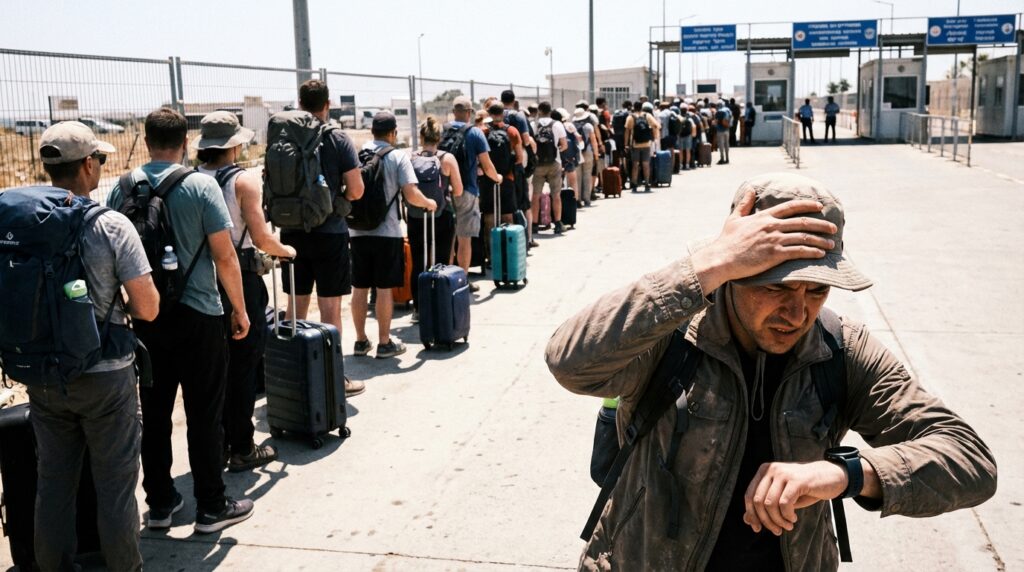
Let us look at the current reality. As of mid-April 2026, the data paints a very clear picture of the midday hustle. If you casually stroll up to the main San Ysidro pedestrian lanes right around lunchtime, you are walking directly into the thick of it. Midday waits consistently average anywhere from 45 to 60 minutes.
To give you a highly specific snapshot, at 11:00 AM Pacific Daylight Time on April 12, travellers faced a solid 60-minute wait, and that was with 17 different inspection lanes actively open and processing people. Now, an hour might not sound terrible, but standing on hot concrete surrounded by thousands of people makes 60 minutes feel like an absolute eternity.
But it gets worse. As the afternoon progresses and shifts into the evening hours, the line violently swells. Daily commuters finish their workdays in Mexico and head back, while tourists wrap up their day trips. During these peak high-traffic periods, the wait can easily stretch to an agonising one to two hours, and sometimes even longer if an unexpected security issue briefly halts the line.
The Magic of Early Morning and Late Night Crossings
Do you want the ultimate secret to crossing the border quickly? You have to become a night owl or a very early bird. The border behaves like a massive tide; you just need to cross when the water recedes.
If you adjust your travel schedule to cross between midnight and 6:00 AM, the massive crowds simply vanish. The wait times plummeted. During these early morning hours, you can frequently breeze through the gates in under 10 to 15 minutes. The same magical drop happens late at night. Real-time user reports on travel apps and digital forums consistently confirm that if you wait until after 10:00 PM to make your northbound journey, the intimidating lines evaporate. If you value your time and your sanity, altering your sleep schedule to cross during these off-peak hours is the smartest decision you will make all trip.
Secret Routes and Alternative Border Checkpoints
San Ysidro is the heavyweight champion of the border, but it is not the only player in the game. Savvy travellers know that stepping slightly off the beaten path can save you an incredible amount of standing around.
Why PedWest Is Your Ultimate Time Saver
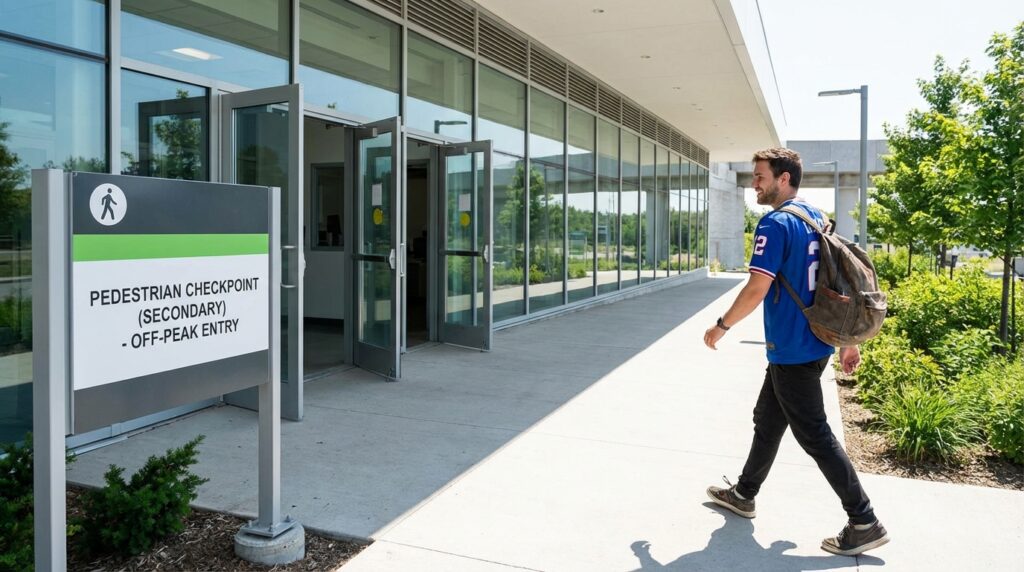
If you absolutely must cross during the daytime, you need to learn about PedWest. This is a secondary pedestrian crossing facility located just a short walk west of the main San Ysidro gates. It is the ultimate local cheat code, but it comes with a major catch.
PedWest operates on highly restricted hours. It is currently only open from 6:00 AM until 2:00 PM. But if you can align your travel plans with that specific eight-hour window, you strike absolute gold. Because many tourists simply do not know it exists or do not want to walk the extra distance to reach it, the lines here are incredibly manageable. The official data consistently reports wait times hovering between a mere 13 and 27 minutes during its operating hours. It is remarkably faster, cleaner, and vastly more efficient than fighting the midday mobs at the main eastern crossing.
The Otay Mesa Option for Faster Transit
There is one more major alternative available to you. The Otay Mesa pedestrian crossing sits several miles to the east of San Ysidro. It is heavily utilised by commercial trucks and local factory workers.
Historically, Otay Mesa boasts significantly lower pedestrian wait times than its massive sibling to the west. You can often walk right up to an officer with very minimal delay. However, this speed comes at a distinct cost of convenience. Otay Mesa is geographically isolated. It is much further away from the tourist centres of Tijuana, and on the US side, public transportation options are severely limited compared to the incredible trolley access at San Ysidro. You will likely need to rely on an expensive rideshare to get back into the heart of San Diego. Use Otay Mesa as your ultimate backup plan if the primary lines are reporting catastrophic, multi-hour delays.
Essential Hacks for a Lightning Fast Crossing
Knowing when and where to cross is only half the battle. You also have to know exactly how to behave when you finally reach the gates. You can shave precious minutes off your wait by simply being prepared.
Leveraging the Ready Lane Advantage
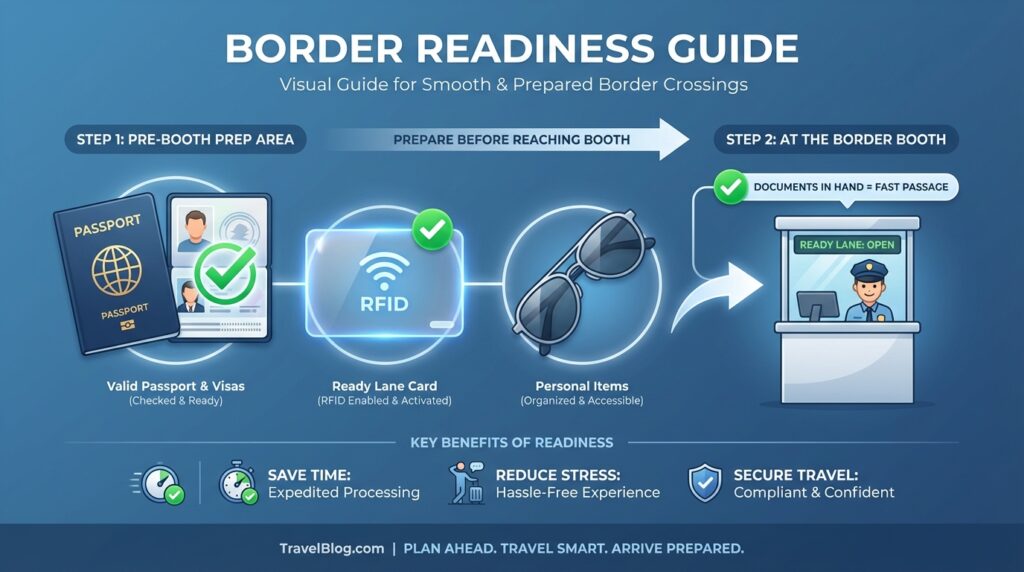
If you hold a modern, radio-frequency identification (RFID)-enabled travel document, you hold the golden ticket. U.S. passport cards, certain border crossing cards, and newer resident alien cards are equipped with this specific technology.
If you have one of these cards, do not stand in the massive general pedestrian line. Look for the brightly marked Ready Lane. This specialised queue moves significantly faster because you simply hold your RFID card up to an electronic reader as you approach the booth. The system pulls up your secure file before you even say hello to the officer, massively speeding up the manual data entry process. It is the closest thing to a VIP lane you will ever find at a federal checkpoint.
Keeping Your Physical Documents Safe and Accessible
Have you ever been stuck in a grocery store line behind someone who waits until the cashier finishes scanning everything before they start slowly searching for their wallet? Do not be that person at the international border.
When you are twenty minutes away from the inspection booth, pull your physical passport out of your bag. Have it securely in your hand, opened to the photo page. Take off your sunglasses and remove your hat. The officers are processing thousands of people, and their patience with disorganised travellers is nonexistent. Having your documents physically ready to hand over instantly keeps the line moving and ensures the officer does not subject you to secondary questioning out of sheer frustration.
Protecting Your Game Day Plans from Border Delays
We are gearing up for the largest sporting event in the history of North America. Millions of fans will be bouncing between massive host cities, completely overwhelming the local infrastructure. If you let a border delay derail your travel day, you might miss the kickoff. You need a digital safety net.
Why Cell Service Fails at the Border Wall
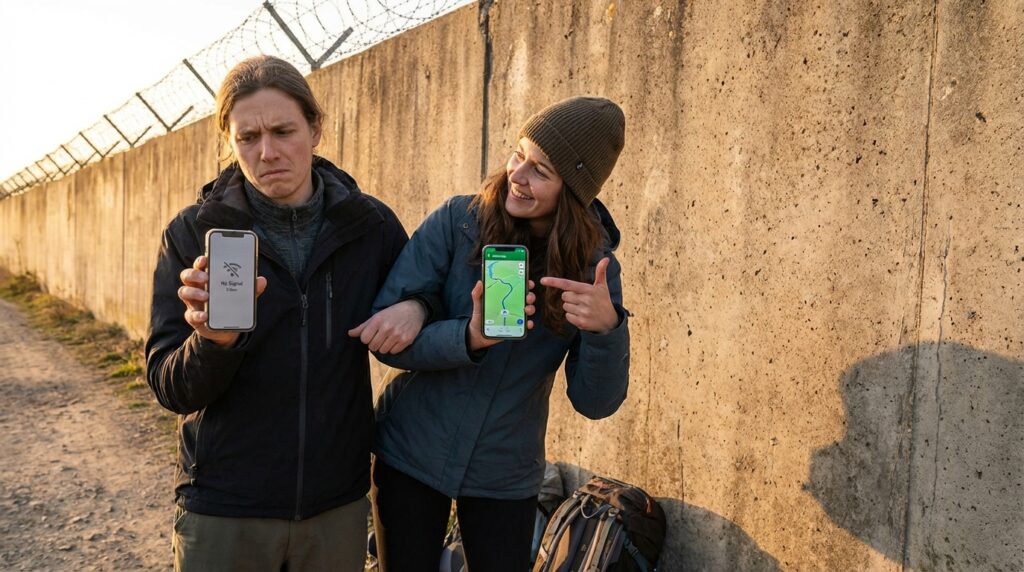
Here is a terrifying technological reality that catches almost every tourist completely off guard. When you are standing exactly on the international borderline, your smartphone absolutely loses its mind.
Your phone tries to desperately ping both the Mexican cell towers in Tijuana and the American cell towers in San Diego simultaneously. This aggressive digital tug-of-war, combined with the sheer density of thousands of other smartphones trying to do the exact same thing in a confined concrete space, causes your cellular data to completely collapse. Your screen will show full signal bars, but your apps will freeze, your maps will refuse to load, and you will be digitally stranded in a massive crowd. You cannot rely on a live internet connection to check the CBP Border Wait Times app when you are standing right at the gates.
Using the Stadium Route App to Master the Chaos
This is exactly why you must secure your travel logistics before you even approach the border zone. As you plan your 2026 travel, you absolutely must pre-download the offline Stadium Route app.
We engineered this digital tool specifically to defeat the technological blackouts of massive crowds and border crossings. Because the entire application lives directly on your smartphone’s hard drive, it functions flawlessly when the international cell towers crash. You can instantly open the app to map out the exact walking path from your Tijuana hotel to the hidden PedWest entrance. You can find the safest transit connections on the San Diego side and map your exact routes to the massive local stadiums without needing a single drop of internet data. It bridges the terrifying gap between two sovereign nations, ensuring you stay perfectly on schedule no matter how chaotic the crossing becomes.
Related Post: Can You Expedite a Canadian eTA Application This Close to Summer
Ending Lines
Navigating the San Diego-Tijuana border crossing does not have to be a miserable, anxiety-inducing nightmare. By aggressively treating this checkpoint with the strategic respect it deserves, you can slide right through the gates and keep your travel momentum rolling. Stop fighting the brutal midday crowds. Set your alarm clock to cross in the early morning darkness, hunt down the efficient PedWest entry point, and always have your physical passport ready in your hand. Most importantly, protect yourself against the inevitable cell service blackout by downloading your offline tools like the Stadium Route app before you leave your hotel room. Master the border timing, secure your digital lifelines, and get ready to experience an absolutely flawless international adventure.