 USA
USA Mexico
 Canada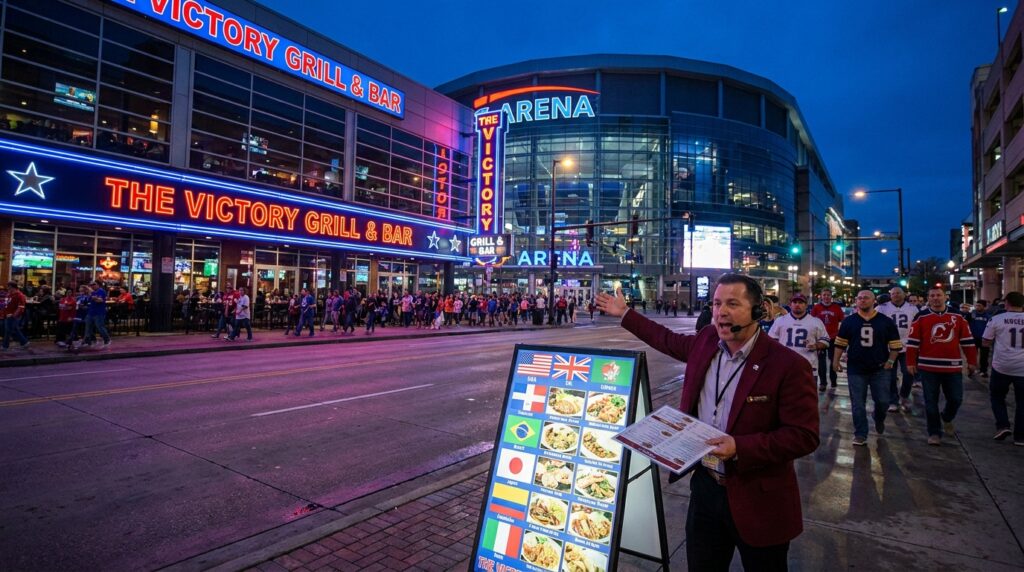
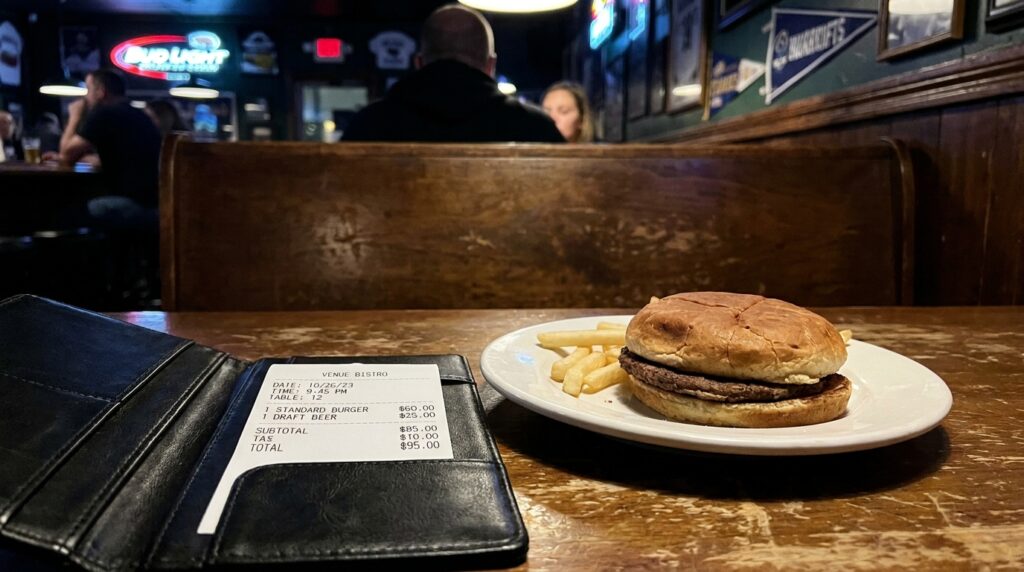
Have you ever walked out of a massive sporting event with your ears ringing and your stomach absolutely screaming for food? We have all been there. You step out of the giant gates at SoFi Stadium or Lumen Field, and you are immediately hit with a heavy wave of exhaustion. You do not want to hunt down a hidden culinary gem. You just want a cold drink and a hot meal. Suddenly, you see a glowing neon sign right across the massive stadium parking lot. You walk in, sit down, and an hour later, you are staring at an outrageous ninety-dollar bill for two incredibly dry, lukewarm burgers. Congratulations. You just fell headfirst into the ultimate game-day financial black hole.
When millions of passionate fans travel to massive American venues like MetLife, AT&T Stadium, NRG, or Hard Rock Stadium, the local hospitality industry goes into absolute overdrive. Overpriced tourist trap restaurants thrive exclusively on massive game-day crowds and intense post-match hunger. They know you are tired; they know you are an out-of-town guest, and they are expertly designed to extract maximum cash from your wallet before you ever realise what is happening. Let us peel back the curtain and show you exactly how to spot these culinary mirages so you can eat like a true local and protect your hard-earned travel budget.
The Game Day Dining Illusion
Restaurants operating in the immediate shadow of a massive sports arena do not play by the normal rules of the culinary world. They do not have to fight for your business using high-quality ingredients or exceptional service. Their entire business model is based purely on geographic convenience.
Why You Fall for the Trap Every Single Time
Think of these establishments as giant, flashing mousetraps. When you are visiting a new city for the spectacular 2026 global football tournament, your brain is overloaded with sensory information. You do not know the local neighbourhoods. You do not know the local transit routes. When you see a massive restaurant situated fifty feet from the stadium exit, your tired brain tells you it is the safest, easiest option. The trap relies entirely on your physical exhaustion and your lack of local knowledge. But once you learn to read the environment, these traps become incredibly easy to dodge.
Immediate Red Flags of a Classic Tourist Trap
You do not need to be a professional food critic to identify a bad restaurant. You just need to open your eyes before you walk through the front door. Tourist traps share a very specific, universal set of behaviours that instantly give them away.
The Aggressive Sidewalk Host
Have you ever walked down a street and had a restaurant employee practically jump into your path, waving a laminated menu in your face? This is the absolute biggest red flag in the entire hospitality industry. We call this fishing. A truly fantastic local restaurant never has to beg people to walk inside. Their food speaks for itself. If an establishment is paying an aggressive host to stand outside the stadium gates and physically herd wandering tourists into their dining room, you should immediately turn around and walk the other way.
The Master of All Cuisines Menu
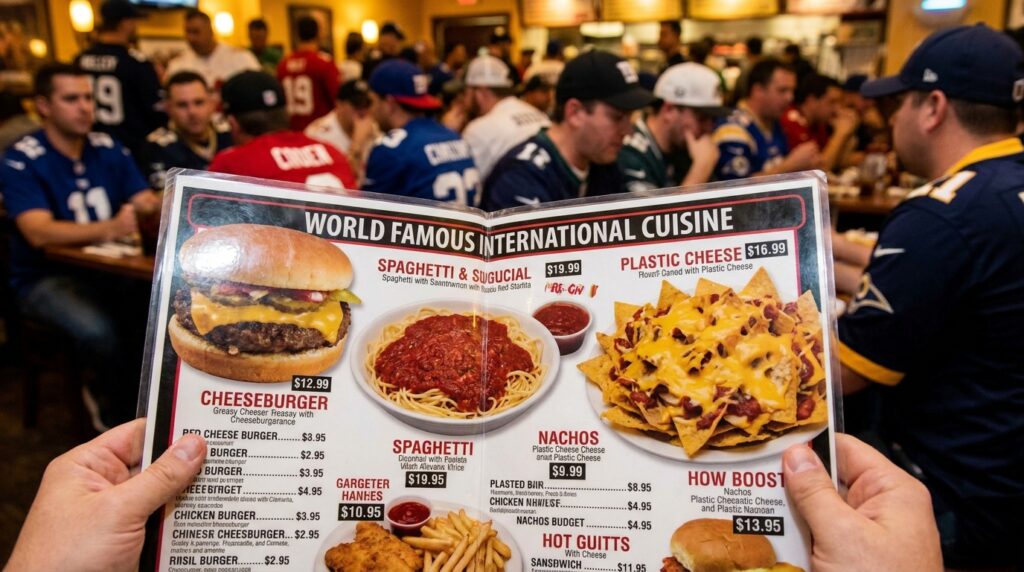
When you finally look at the menu, pay very close attention to the focus. Authentic local eateries usually specialise in one or two specific things. A tourist trap tries to be everything to everyone. If you open a menu and see generic American burgers sitting right next to an Italian pasta page, which is followed by a Mexican fajita section, you are in terrible danger.
Furthermore, if the menu is completely plastered with glossy, stock-photo images of generic “anywhere USA” dishes, or if the signage outside is translated into five different languages, you are looking at a corporate machine. These massive kitchens use frozen, pre-packaged ingredients to churn out hundreds of mediocre meals per hour. It is factory food disguised as a local experience.
Oversized Dining Rooms and Zero Locals
Look through the front window before you ask for a table. Tourist traps in heavy tourist corridors are usually massive, oversized operations boasting two hundred or more seats. Now, look closely at the people sitting in those seats. Are they wearing away-team jerseys? Do they have massive cameras slung around their necks? Are there shopping bags piled up next to their chairs?
If the dining room is entirely packed with out-of-town guests and features absolutely zero locals, you are in a trap. Locals know exactly where the good food is, and they actively avoid the chaos of the stadium perimeter. If the locals refuse to eat there, you should refuse to eat there, too.
The Financial Reality of the Stadium Radius
We must have a brutally honest conversation about the economics of American stadium food. Operating a massive restaurant directly next to a venue like NRG Stadium or MetLife costs an absolute fortune in commercial rent. The owners have to recoup that massive overhead somehow, and they do it by aggressively inflating your bill.
Calculating the Proximity Markup
When you sit down in a tourist trap, you are not paying for the quality of the food. You are paying a proximity tax. If you compare the prices at these establishments to the same dishes in a normal residential neighbourhood, the maths becomes horrifying. You will routinely find prices that are thirty to fifty per cent higher simply because the restaurant shares a zip code with a massive sports arena. You are essentially throwing your money away for the privilege of sitting in a loud, overcrowded room filled with other confused tourists.
How to Find the Hidden Culinary Gems
You know exactly what to avoid. Now, how do you actually find an incredible, authentic meal before or after the match? The fix is actually remarkably simple, but it requires a tiny bit of proactive effort on your part.
Embracing the Short Strategic Walk
The single greatest weapon you have against tourist traps is your own two feet. The dangerous pricing zone usually only extends for a few blocks around the immediate stadium gates. If you are willing to walk just five to fifteen minutes away from the stadium perimeter, the culinary landscape shifts dramatically. Alternatively, hopping into a quick Uber and travelling two miles down the road will completely remove you from the tourist trap ecosystem. You will suddenly find yourself in the vibrant, authentic neighbourhoods where the locals actually spend their Friday nights.
Decoding Online Reviews Like a Pro
Your smartphone is an incredible tool for vetting restaurants, but you have to know how to read between the lines. Do not just look at the overall star rating on Yelp or Google. You need to dive directly into the written comments.
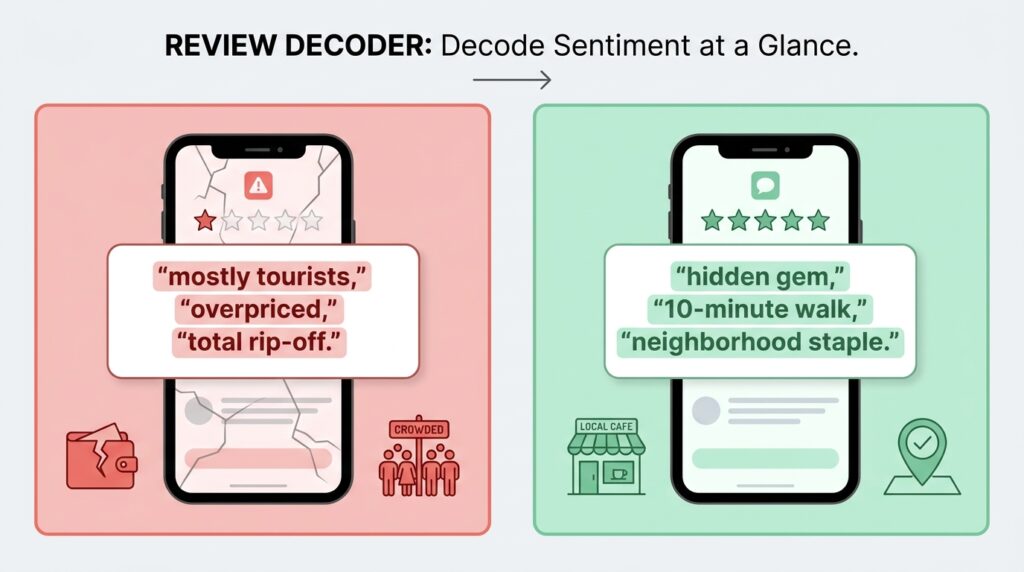
Use the search function within the reviews and look for specific red flag phrases. If you see multiple people complaining that the restaurant is “mostly tourists”, “overpriced”, or a “total rip-off”, trust them. Conversely, if the reviews mention that the spot is a “hidden gem” or a “neighbourhood staple”, you have likely found a winner.
Asking the Right People for Directions
Do not rely entirely on algorithms to plan your dinner. Talk to the actual human beings around you. If you are wandering the parking lot before a match, walk up to a group of local tailgaters grilling food. Ask the stadium security staff or the local parking attendants where they go to grab a bite after their shift ends. These people spend every single week in the area. They know exactly which local sports bars serve the best wings and which hidden taquerias have the freshest ingredients.
Finding the Authentic Eater Heatmaps
If you want professional guidance, lean heavily on reputable digital publications like Eater. Their city-specific heatmaps and dining guides are curated by local food critics who aggressively despise tourist traps. These guides will pinpoint the exact, authentic local eateries that deserve your money, ensuring you get a true taste of the host city.
Beating the Post-Game Digital Blackout
We have given you the perfect blueprint for finding an incredible meal. But there is a massive, terrifying logistical hurdle you must overcome to actually reach that restaurant. You have to survive the post-match technological collapse.
The Danger of the Stadium Network Crash
Imagine this exact scenario. The massive 2026 World Cup match ends. Eighty thousand hyped-up fans all stand up at the same moment and try to exit the gates. Every single person pulls out their smartphone to find a restaurant, text their friends, or call a rideshare.
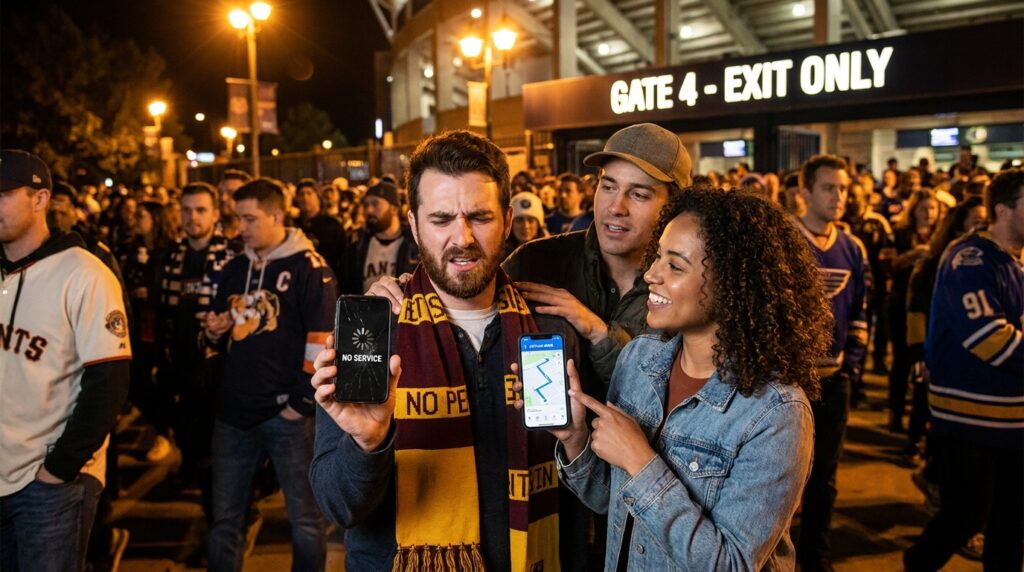
What happens next? The local cellular networks violently collapse. The massive, synchronised flood of digital data completely overwhelms the nearby cell towers. Your expensive smartphone will show full signal bars, but your maps will absolutely refuse to load. Your review apps will freeze entirely. You will be digitally stranded in a massive, chaotic crowd of people, entirely unable to find your way to that amazing local spot you researched earlier. This is exactly when tired fans give up and accidentally wander right into the glowing neon tourist traps.
Why the Stadium Route App Is Completely Mandatory
This exact terrifying scenario is precisely why your game-day preparation must include downloading the offline Stadium Route app before you ever leave your hotel room. You simply cannot rely on a live internet connection when the massive tournament crowds descend upon the stadium.
We specifically engineered this powerful digital ecosystem to conquer the dangerous network blackouts of massive global mega-events. Because the entire application lives permanently on your smartphone’s hard drive, it functions flawlessly even when the local cell towers completely crash under the weight of the existing crowds.
You can instantly open the app to map your exact, safe pedestrian walking paths away from the stadium gridlock. You can instantly map safe routes to genuine local eateries, completely avoiding the dangerous tourist-trap clusters right outside the gates. You can even use it to navigate your way back to your specific stadium seat after grabbing a halftime snack. It does all of this without needing a single drop of live internet data. It serves as your ultimate, invincible digital safety net when the rest of the stadium goes completely dark.
Related Post: Finding Last Minute Safe Accommodation Near Downtown Miami
Ending Lines
Travelling to a massive American stadium for the absolute pinnacle of global sports is an adventure that should engage all of your senses. The incredible matches will provide the visual thrill, but it is the vibrant, authentic local food scene that will truly capture your heart. Do not let the aggressive sidewalk hosts and the generic, overpriced menus steal your travel budget. By learning to spot the massive dining rooms filled with out-of-town jerseys, embracing the short walk away from the stadium perimeter, and decoding online reviews like a true professional, you protect your wallet and your palate. Prepare yourself for the inevitable post-match cellular collapse by pre-downloading your invincible offline stadium route app, and step out of the stadium gates with absolute confidence. Navigate the massive crowds flawlessly, find the perfect authentic meal, and savour every single incredible moment of your football journey.