 USA
USA Mexico
 Canada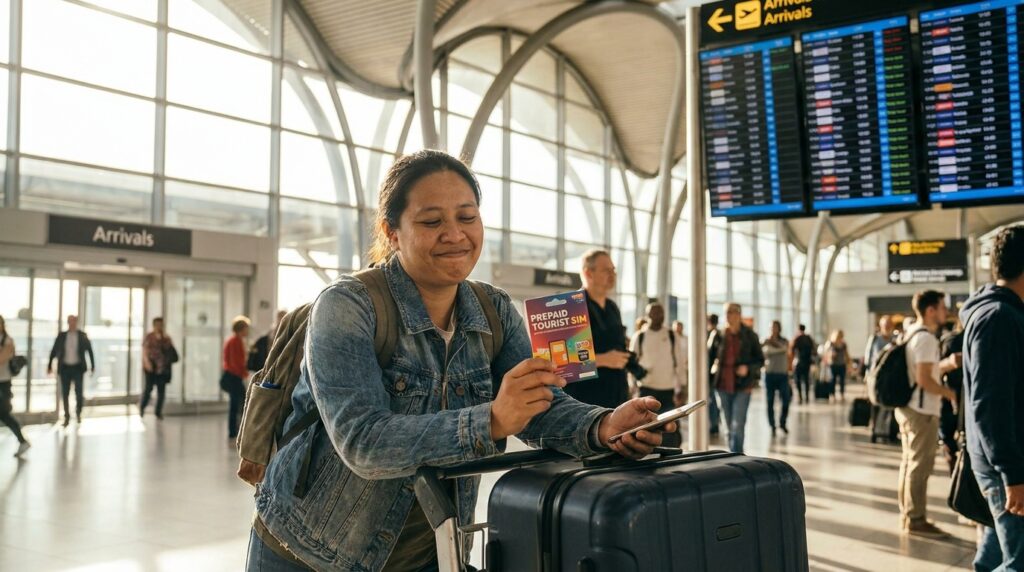
Have you ever stepped off an exhausting twelve-hour international flight, pulled out your smartphone to message your family, and realised you are completely cut off from the digital world? It is an incredibly isolating and terrifying feeling. When millions of passionate fans land in the United States for the monumental 2026 global football tournament, securing an immediate internet connection is not just a luxury. It is an absolute logistical necessity. You need to call rideshares, translate menus, load your digital match tickets, and navigate massive, unfamiliar cities.
Walking out of the terminal doors without a working phone is like wandering into a dense jungle without a compass. You are instantly vulnerable. While relying entirely on patchy, insecure airport Wi-Fi might sound like a decent temporary strategy, it completely falls apart the moment you step onto the curb. You need a dedicated, reliable local connection the very second your boots hit American soil. We are going to build a comprehensive, bulletproof guide to securing the best local SIM cards right at the airport. Let us peel back the curtain, expose the hidden markups, compare the absolute best networks, and get your digital life fully connected before you even grab your suitcases off the baggage carousel.
The Undisputed King of Airport Connectivity
When you wander through the massive, confusing arrival halls of major international hubs like LAX, JFK, MIA, ORD, SFO, and ATL, you will be bombarded by brightly coloured advertisements promising lightning-fast cellular speeds. It is an overwhelming sensory experience. Do not let the flashy marketing completely scramble your brain. You must ruthlessly cut through the noise.
Why T-Mobile Prepaid Tourist Plans Dominate
If you want the absolute most reliable, tourist-friendly experience, point your compass directly toward the magenta-coloured signs. T-Mobile consistently ranks as the top overall choice for international tourists, and for incredibly good reasons. They have heavily invested in their network infrastructure across all the major host cities. This means you get access to a remarkably strong, incredibly fast 5G network that performs beautifully in dense urban environments.
When you approach the counter, ask specifically for the T-Mobile prepaid tourist plans or their popular Connect kits. These specific short-term bundles are engineered perfectly for visiting fans. You can typically expect to pay anywhere from thirty to fifty dollars. In exchange for your cash, you receive an incredibly generous five to fifteen gigabytes of high-speed data, alongside unlimited domestic talk and text, usually valid for a full thirty days. It is a phenomenal value that provides ultimate peace of mind.
Locating The Right Kiosks In Massive Terminals
Knowing which carrier to choose is only half the battle. You actually have to physically find them inside the sprawling airport complex. Finding a telecom kiosk in a massive international terminal can feel like hunting for a needle in a massive architectural haystack.
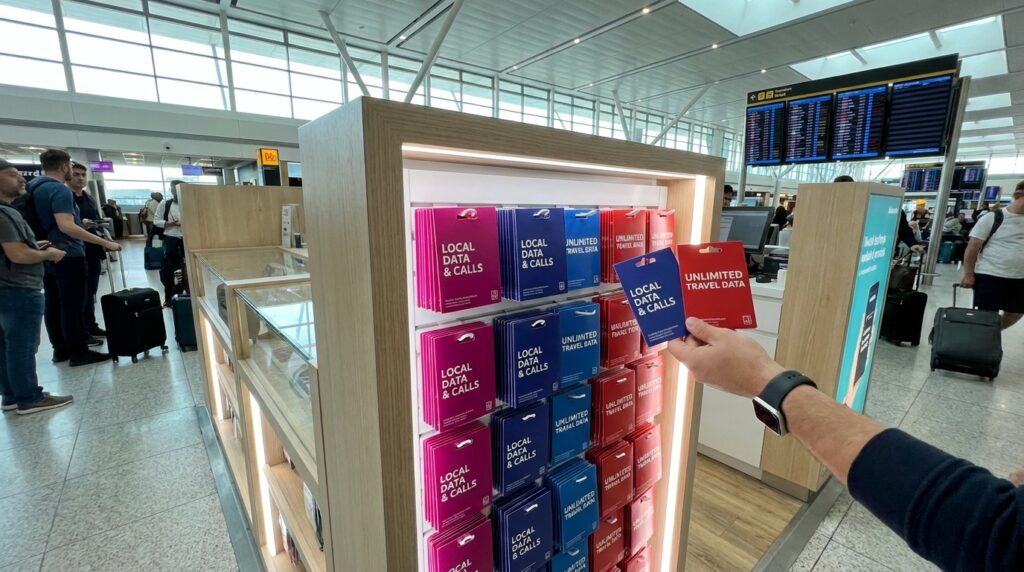
Once you clear customs and step into the main arrivals hall, keep your eyes peeled for dedicated currency exchange counters. These financial booths frequently double as authorised SIM card vendors. Furthermore, look for the brightly lit InMotion electronic stores that dominate modern airport concourses. These specialised travel tech shops almost always carry a massive stack of authentic T-Mobile starter kits. If you do not see a dedicated telecom kiosk right near the exit doors, simply ask an airport ambassador to point you toward the nearest electronics vendor.
Evaluating The Other Major Network Players
Perhaps you cannot find a T-Mobile vendor, or maybe the line is simply too long. You are not completely out of options. The American telecommunications landscape is massive, and several other major players actively compete for your hard-earned tourist dollars directly inside the airport terminals.
Navigating AT&T And Verizon Options
You will inevitably see the familiar logos of AT&T and Verizon glowing from various vending machines and third-party vendor kiosks. These are the two largest legacy networks in the United States. However, bigger does not always mean better for a short-term international visitor.
While these massive carriers offer robust nationwide coverage, they frequently fall slightly short for tournament travellers. Their prepaid options tend to be significantly more expensive than the competition. More importantly, recent network stress tests indicate that their data speeds can occasionally become much slower in hyper-dense urban stadium areas compared to the optimised 5G grid operated by T-Mobile. They will absolutely keep you connected, but you will pay a massive premium for a slightly slower overall experience.
Unlocking Budget Deals With Lycamobile
What if you blew your entire travel budget on front-row match tickets and you desperately need a cheaper communication alternative? You need to actively hunt for a Lycamobile vendor.
Lycamobile operates as a mobile virtual network operator. This means they do not actually own their own physical cell towers. Instead, they brilliantly piggyback directly onto the robust T-Mobile network. You get the phenomenal 5G coverage of the premium network without paying the massive premium price tag. If you manage to locate a kiosk selling these specific cards, you can frequently snag a phenomenal plan starting around fifteen to twenty-five dollars. It is the ultimate budget-friendly travel hack for the financially conscious football fan.
Surviving The Inevitable Airport Markup Trap
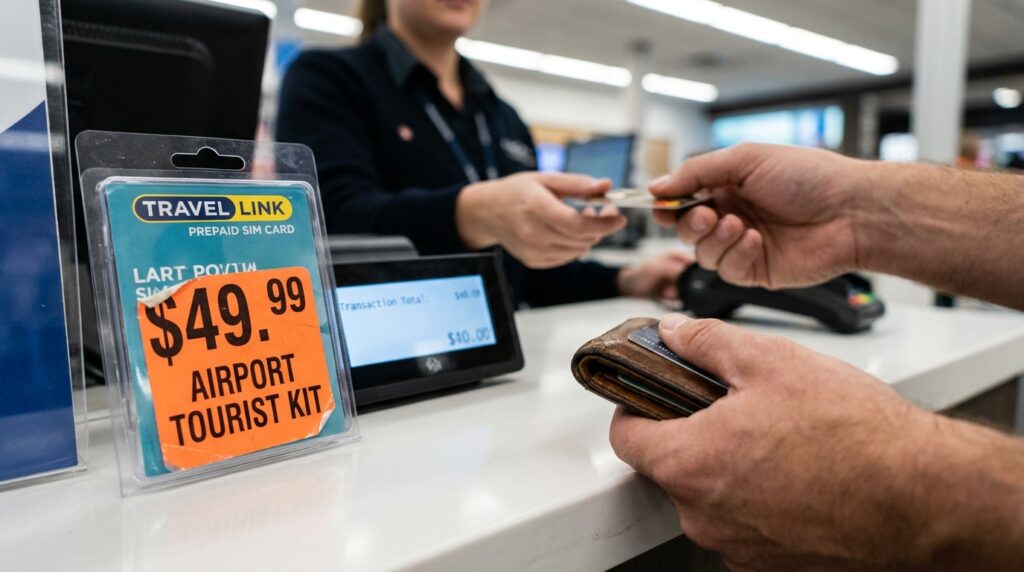
We must have a brutally honest conversation about the economics of airport retail. Buying absolutely anything inside an airport terminal is incredibly expensive. Buying a SIM card at the airport is exactly like buying a bottle of water at a rock concert. You are paying a massive premium purely for the convenience of immediate access.
Paying For Ultimate Convenience
When you swipe your credit card at an airport kiosk, expect to experience a sudden burst of sticker shock. The physical SIM cards and the prepaid plans sold inside the terminal walls routinely cost twenty to forty per cent more than the same options sold at a standard city Walmart or a suburban carrier store.
The vendors know you are desperate. They know you need a map to find your hotel, and they know you will gladly pay a twenty-dollar markup to eliminate that burning travel anxiety. If you are willing to navigate to your hotel using offline maps and visit a local shopping centre the next morning, you can save a significant amount of cash. However, for most international fans, the steep airport markup is a completely justifiable expense to secure immediate, flawless communication.
Immediate Activation And ID Requirements
Are you ready to hand over your cash? Before you approach the counter, you must ensure your technology is properly prepared. You cannot simply shove a foreign SIM card into a locked device. Your smartphone must be entirely carrier-unlocked by your home provider before you ever board your flight. If your phone is locked, an American SIM card becomes a completely useless piece of plastic.
When you purchase the plan, the activation process is remarkably fast. Have your physical passport ready, as the vendors require official government identification to legally verify your line. Once the paperwork clears, simply insert the tiny card, follow the straightforward on-screen prompts, and the activation is usually completely instant. You will be sending selfies from the airport curb in less than five minutes.
Skipping the Kiosk with Modern eSIM Technology
What if I told you that you could completely bypass the airport kiosks, avoid the aggressive retail markups, and land in the United States with a fully functioning data connection? The future of travel technology is already here, and it eliminates the need for tiny, easily lost pieces of plastic.
Airalo, Holafly, and Digital Simplicity
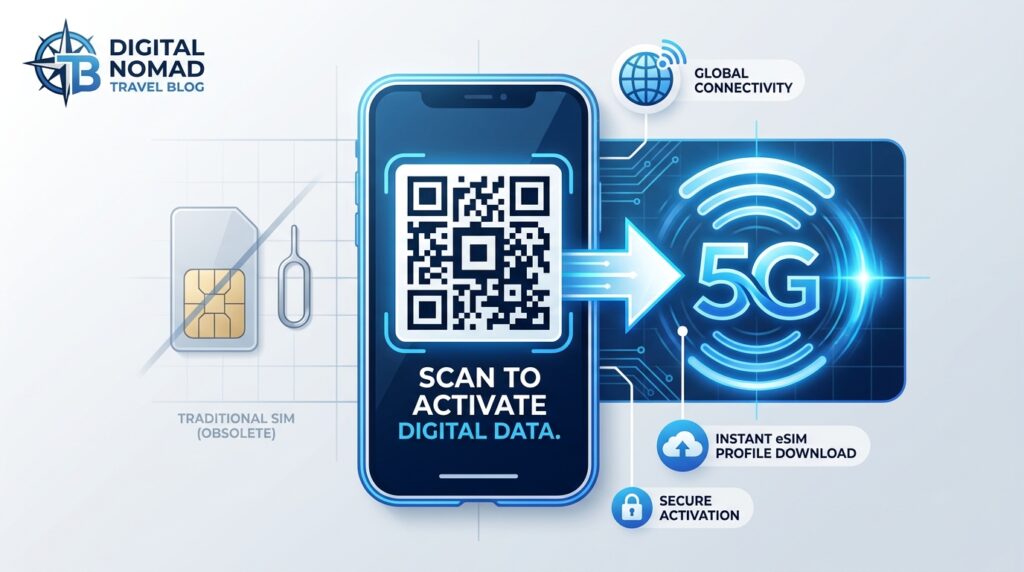
For true, unparalleled last-minute convenience, savvy international fans are aggressively pivoting toward eSIM technology. Modern smartphones contain an embedded, digital SIM card that you can program entirely over the internet.
Instead of waiting in line at LAX, you can visit digital marketplaces like Airalo, Holafly, or even T-Mobile’s own direct digital portal. You simply purchase a data plan online before your flight takes off. They send you a simple QR code. You scan the code, download the digital profile, and activate the line the exact moment your aeroplane tyres hit the American runway. You walk right past the crowded kiosks and head directly toward the exit doors like an absolute travel professional.
Why Physical SIM Cards Still Matter
If eSIM technology is so incredibly convenient, why do physical cards still dominate the airport environment? Not every single smartphone model currently supports the eSIM standard. Older devices absolutely require a physical chip to communicate with the cell towers. Furthermore, some travellers simply prefer the tangible reliability of physically swapping their home card out so they do not accidentally incur massive international roaming charges. If you fall into this category and you need a physical card right away, purchasing a reliable T-Mobile kit inside the terminal remains your absolute safest strategy.
Conquering Digital Blackouts During Massive Matches
You bought the perfect SIM card, activated your lightning-fast 5G plan, and navigated successfully to the massive host city stadium. You watch an incredible, breathtaking ninety minutes of world-class football. But the greatest logistical challenge of your entire vacation happens the very moment the referee blows the final whistle.
The Terrifying Reality Of Stadium Network Crashes
When eighty thousand highly emotional, incredibly hyped-up fans all stand up at the same moment to exit the stadium gates, they all pull out their smartphones simultaneously. They try to upload celebration videos to social media, call an Uber, or text their friends in the parking lot.
What happens next is entirely predictable. The massive, highly concentrated surge of digital data completely overwhelms the nearby cell towers. The local cellular networks violently collapse under the sheer weight of the crowd. It does not matter if you bought the most expensive, premium 5G plan on the market. Your expensive smartphone will show full signal bars, but absolutely nothing will load. Your online maps will freeze entirely. Your rideshare applications will spin endlessly. You will be completely digitally stranded in a massive, chaotic sea of people, entirely unable to find your way back to your hotel room.
Related Post: How to Spot Overpriced Tourist Trap Restaurants Near American Stadiums
Your Ultimate Offline Survival Tool
This exact terrifying scenario is precisely why your game-day preparation must include downloading the offline Stadium Route app before you ever leave your home country. You simply cannot rely on a live internet connection when the massive tournament crowds descend upon the stadium architecture.
We specifically engineered this incredibly powerful digital ecosystem to conquer the dangerous network blackouts of massive global mega-events. Because the entire application lives permanently on your smartphone’s hard drive, it functions flawlessly even before your new SIM card activates or when the networks get completely congested under massive exiting crowds.
You can instantly open the app to map your exact, complex airport exits upon landing. You can pinpoint the exact safe pedestrian paths away from the stadium gridlock. You can find your specific stadium gates and map the safest routes back to the main transit hubs without needing a single drop of live internet data. It bridges the terrifying gap between the chaotic stadium exits and the safe zones where your premium cellular network finally reconnects.
Ending Lines
Travelling across the globe to witness the spectacular 2026 matches is an adventure that demands serious logistical preparation. Securing a reliable local connection the moment you land is the foundation of a phenomenal trip. By bypassing the slower legacy networks and targeting the highly efficient T-Mobile prepaid tourist plans, you guarantee fast, reliable speeds in the massive host cities. Embrace the digital revolution of eSIM technology if your phone allows it, but never fear the physical airport kiosks if you need immediate, tangible connectivity. Most importantly, protect your journey against the inevitable stadium cellular crashes by pre-downloading your invincible offline stadium route app. Stay completely connected, navigate the massive crowds flawlessly, and savour every single incredible moment of the beautiful game.